

-
- 1x de R$ 4.500,00 sem juros
- 2x de R$ 2.250,00 sem juros
- 3x de R$ 1.500,00 sem juros
- 4x de R$ 1.125,00 sem juros
- 5x de R$ 900,00 sem juros
- 6x de R$ 750,00 sem juros
- 7x de R$ 642,85 sem juros
- 8x de R$ 562,50 sem juros
- 9x de R$ 500,00 sem juros
- 10x de R$ 450,00 sem juros
- 11x de R$ 409,09 sem juros
- 12x de R$ 375,00 sem juros
-
R$ 4.500,00

-
R$ 4.500,00


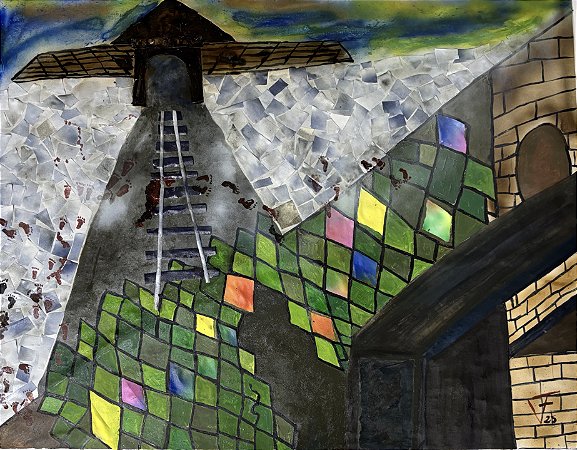
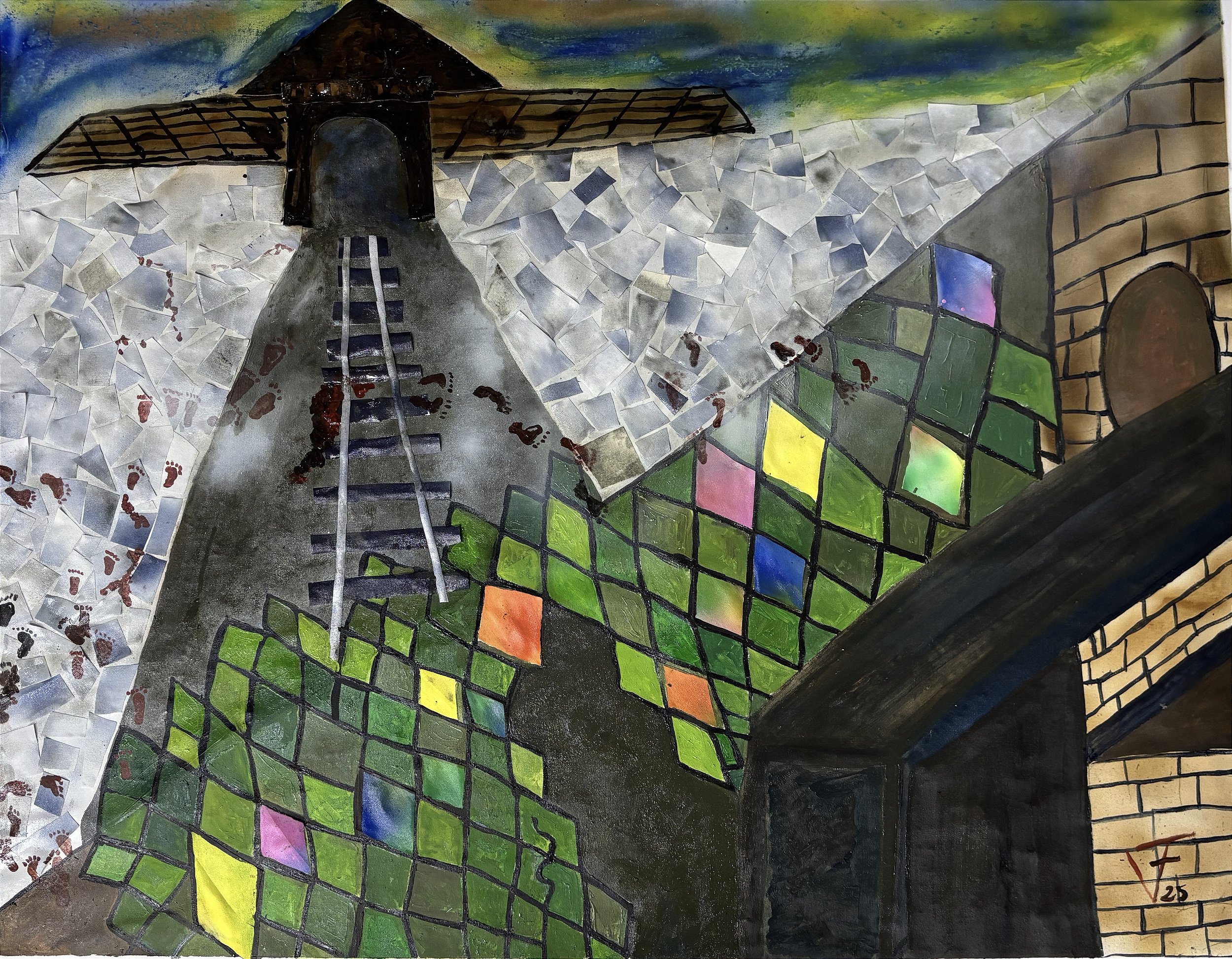
Análise Técnica. A obra "BLOOD AND ASHES", criada em 2025 com dimensões de 93x115 cm, é uma representação artística profundamente impactante e visceral, utilizando óleo sobre tela e mídia mista (terebentina, secador de cobalto e colagem de canvas previamente pintado). A paleta de cores é dominada por tons sombrios, gélidos e terrosos, com cinzas e brancos frios que evocam a neve compactada e o gelo quebrado do inverno rigoroso da Polônia, complementados por marrons e pretos profundos que remetem à desolação e à matéria bruta do campo. Estes são contrastados por vermelhos vivos e perturbadores que representam o sangue, e verdes escuros e opacos para o gramado e possivelmente os fornos. O uso de óleo permite a criação de texturas densas e camadas ricas, enquanto a mídia mista adiciona uma dimensão física e simbólica. O chão é construído com uma colagem de pedaços de tela pintados em tons de cinza e branco, que se assemelha a uma tapeçaria fragmentada de neve compactada, gelo quebrado ou cinzas endurecidas pelo frio cortante, criando uma superfície despedaçada e inóspita. As manchas de sangue e lama, com pinceladas gestuais, conferem uma sensação de urgência e violência, intensificadas pela imagem do frio penetrante. A estrutura da estrada de ferro, delineada com linhas retas e sombrias, corta o cenário gélido, desaparecendo em um portal igualmente sombrio. O céu, se visível, é provavelmente turvo, com pinceladas em azuis profundos e amarelos turvos, com toques de verde tingidos pelo gelo, reforçando a sensação de desolação invernal. A aplicação de terebentina e secador de cobalto na mídia mista indica um processo de criação que pode ter envolvido técnicas de diluição e secagem rápida, contribuindo para a crueza e a imediatez da expressão, acentuada pelo contexto de um ambiente brutalmente frio.
Análise Conceitual. O título "BLOOD AND ASHES" é uma declaração direta e brutal da essência da obra, que é uma poderosa evocação do campo de concentração de Auschwitz-Birkenau, com o pano de fundo do inverno rigoroso da Polônia intensificando a narrativa de sofrimento. Ao centro, a estrada de ferro é o elemento central e mais sombrio, simbolizando a jornada sem retorno dos prisioneiros. Ela se projeta de uma estrutura escura, representando a entrada para o inferno, onde vagões superlotados com famílias inteiras, idosos e crianças, vindos de toda a Europa, chegavam após dias de sofrimento em condições desumanas, sem água ou alimento, culminando na morte de mais de 50% dos ocupantes antes mesmo da chegada. O frio penetrante, a neve e o gelo do inverno polonês tornam essa jornada ainda mais excruciante e a chegada ao campo ainda mais desesperadora. As numerosas pegadas escuras, algumas visivelmente manchadas de vermelho, sobre a superfície fria e irregular do chão, são um elemento gráfico e emocional fortíssimo. Elas representam o rastro das últimas pegadas daqueles que foram submetidos à barbárie, simbolizando o sofrimento, a desorientação e a violência que os acompanhou até o fim, agravados pela brutalidade do clima. A grande mancha próxima aos trilhos reforça essa tragédia visceral. À direita e abaixo, a estrutura de tijolos envelhecidos com uma abertura escura e arqueada representa inequivocamente os fornos crematórios, para onde os corpos eram levados após as câmaras de gás – destino de mulheres com filhos pequenos, idosos e deficientes, separados na chegada. A divisão com grades e a alusão verde a um gramado à direita, apesar de sua cor "verde de esperança", revela uma ironia cruel: "para qualquer lado que se vá, a morte seria o resultado final." Este gramado, situado em meio ao gelo e à desolação do inverno, representa a falsa esperança ou a indiferença da natureza diante da depravação humana. A imagem é uma representação potente de um ambiente inóspito, onde a brutalidade do clima invernal da Polônia se une a uma narrativa visual de luta, confinamento e uma esperança frágil, sendo um testemunho visual da crueldade humana, forçando o observador a confrontar uma das páginas mais sombrias da história e a refletir sobre a importância da memória para que tais atrocidades jamais se repitam.
Análise Estilística. "BLOOD AND ASHES" se alinha fortemente com as vertentes do Expressionismo, que busca expressar emoções intensas e a realidade subjetiva, frequentemente distorcida ou crua. A obra utiliza a linguagem abstrata e gestual para comunicar o trauma e a dor de forma visceral, amplificada pelo contexto do inverno rigoroso da Polônia. O uso da mídia mista com colagem de canvas previamente pintado adiciona uma camada de complexidade textural e conceitual, remetendo à fragmentação de vidas e à difícil reconstrução de uma memória dolorosa. Essa técnica, ao empregar pedaços de tela que já carregavam sua própria história de pintura, confere à obra uma qualidade de palimpsesto, onde o passado se manifesta através de camadas, similar à maneira como a paisagem gélida guarda as marcas do sofrimento. A composição, embora abstrata em sua execução, possui elementos figurativos e simbólicos claros (estrada de ferro, fornos, pegadas) que guiam a narrativa e ancoram o espectador na realidade histórica, intensificando a sensação de aprisionamento e desesperança que o ambiente invernal evoca. A disposição desses elementos cria uma narrativa visual de progressão e destino fatal, sublinhada pela atmosfera gélida e desoladora. A paleta de cores, intencionalmente sombria e fria, contrastada por pontos de terror (o sangue) e ironia (o gramado em meio à desolação), serve para intensificar a experiência emocional. A obra, criada em 2025, demonstra como a arte contemporânea continua a revisitar e reinterpretar eventos históricos traumáticos, utilizando novas abordagens materiais e estilísticas para manter viva a memória e a reflexão sobre a condição humana e seus extremos, com o cenário do inverno polonês atuando como um personagem silente e implacável nessa tragédia.
INGLÊS
Technical Analysis. The artwork "BLOOD AND ASHES", created in 2025 with dimensions of 93x115 cm, is a profoundly impactful and visceral artistic representation, utilizing oil on canvas and mixed media (turpentine, cobalt dryer, and collage of pre-painted canvas). The color palette is dominated by somber, cold, and earthy tones, with grays and cool whites evoking the compacted snow and broken ice of the harsh Polish winter, complemented by deep browns and blacks referring to the desolation and raw material of the camp. These are contrasted by vivid and disturbing reds representing blood, and dark, opaque greens for the lawn and possibly the ovens. The use of oil allows for the creation of dense textures and rich layers, while mixed media adds a physical and symbolic dimension. The ground is constructed with a collage of painted canvas pieces in shades of gray and white, resembling a fragmented tapestry of compacted snow, broken ice, or ashes hardened by the biting cold, creating a shattered and inhospitable surface. The blood and mud stains, with gestural brushstrokes, convey a sense of urgency and violence, intensified by the image of penetrating cold. The railway structure, delineated with straight, somber lines, cuts across the frozen scenery, disappearing into an equally dark portal. The sky, if visible, is likely murky, with brushstrokes in deep blues and turbid yellows, with touches of green tinged by ice, reinforcing the feeling of winter desolation. The application of turpentine and cobalt dryer in the mixed media indicates a creative process that may have involved dilution and fast-drying techniques, contributing to the rawness and immediacy of the expression, accentuated by the context of a brutally cold environment.
Conceptual Analysis. The title "BLOOD AND ASHES" is a direct and brutal statement of the artwork's essence, which is a powerful evocation of the Auschwitz-Birkenau concentration camp, with the backdrop of the harsh Polish winter intensifying the narrative of suffering. At the center, the railway tracks are the central and most somber element, symbolizing the one-way journey of the prisoners. They project from a dark structure, representing the entrance to hell, where overcrowded wagons with entire families, elderly, and children, coming from all over Europe, arrived after days of suffering in inhumane conditions, without water or food, culminating in the death of over 50% of the occupants before arrival. The penetrating cold, snow, and ice of the Polish winter make this journey even more excruciating and the arrival at the camp even more desperate. The numerous dark footprints, some visibly stained with red, on the cold and uneven surface of the ground, are an extremely strong graphic and emotional element. They represent the trail of the last steps of those subjected to barbarism, symbolizing the suffering, disorientation, and violence that accompanied them to the end, exacerbated by the brutality of the climate. The large stain near the tracks reinforces this visceral tragedy. To the right and below, the aged brick structure with a dark, arched opening unequivocally represents the crematorium ovens, where bodies were taken after the gas chambers – the destination for women with small children, the elderly, and the disabled, separated upon arrival. The division with fences and the green allusion to a lawn on the right, despite its "green of hope" color, reveals a cruel irony: "whichever way one goes, death would be the final outcome." This lawn, situated amidst the ice and desolation of winter, represents false hope or nature's indifference in the face of human depravity. The image is a potent representation of an inhospitable environment, where the brutality of the Polish winter climate unites with a visual narrative of struggle, confinement, and fragile hope, serving as a visual testament to human cruelty, forcing the observer to confront one of history's darkest pages and to reflect on the importance of memory so that such atrocities never recur.
Stylistic Analysis. "BLOOD AND ASHES" strongly aligns with the tenets of Expressionism, which seeks to express intense emotions and subjective reality, often distorted or raw. The artwork uses abstract and gestural language to communicate trauma and pain in a visceral way, amplified by the context of the harsh Polish winter. The use of mixed media with a collage of pre-painted canvas adds a layer of textural and conceptual complexity, referring to the fragmentation of lives and the difficult reconstruction of a painful memory. This technique, by employing canvas pieces that already carried their own painting history, imbues the artwork with a palimpsest quality, where the past manifests through layers, similar to how the frozen landscape holds the marks of suffering. The composition, although abstract in its execution, has clear figurative and symbolic elements (railway, ovens, footprints) that guide the narrative and anchor the viewer in historical reality, intensifying the sense of imprisonment and hopelessness that the winter environment evokes. The arrangement of these elements creates a visual narrative of progression and fatal destiny, underscored by the frigid and desolate atmosphere. The color palette, intentionally somber and cold, contrasted by points of terror (the blood) and irony (the lawn amidst the desolation), serves to intensify the emotional experience. The artwork, created in 2025, demonstrates how contemporary art continues to revisit and reinterpret traumatic historical events, using new material and stylistic approaches to keep memory and reflection on the human condition and its extremes alive, with the setting of the Polish winter acting as a silent and relentless character in this tragedy.
Produtos relacionados

A Galeria Margot nasceu do olhar sensível e da jornada pessoal do médico e artista plástico Fábio Teixeira. Fundada como um espaço de expressão e resiliência, a galeria celebra a arte contemporânea em suas diversas formas, refletindo a paixão de seu idealizador por cores, texturas e a capacidade transformadora da criação artística. Mais que uma galeria, é um lugar onde a arte floresce como um legado de amor e superação.


Galeria Margot - CPF: 543.143.139-00 © Todos os direitos reservados. 2026
