

-
- 1x de R$ 6.000,00 sem juros
- 2x de R$ 3.000,00 sem juros
- 3x de R$ 2.000,00 sem juros
- 4x de R$ 1.500,00 sem juros
- 5x de R$ 1.200,00 sem juros
- 6x de R$ 1.000,00 sem juros
- 7x de R$ 857,14 sem juros
- 8x de R$ 750,00 sem juros
- 9x de R$ 666,66 sem juros
- 10x de R$ 600,00 sem juros
- 11x de R$ 545,45 sem juros
- 12x de R$ 500,00 sem juros
-
R$ 6.000,00

-
R$ 6.000,00


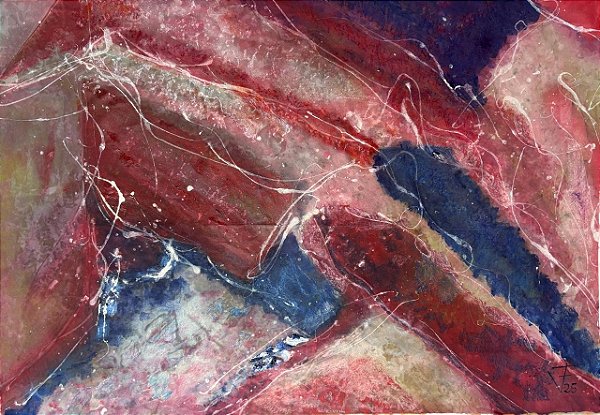
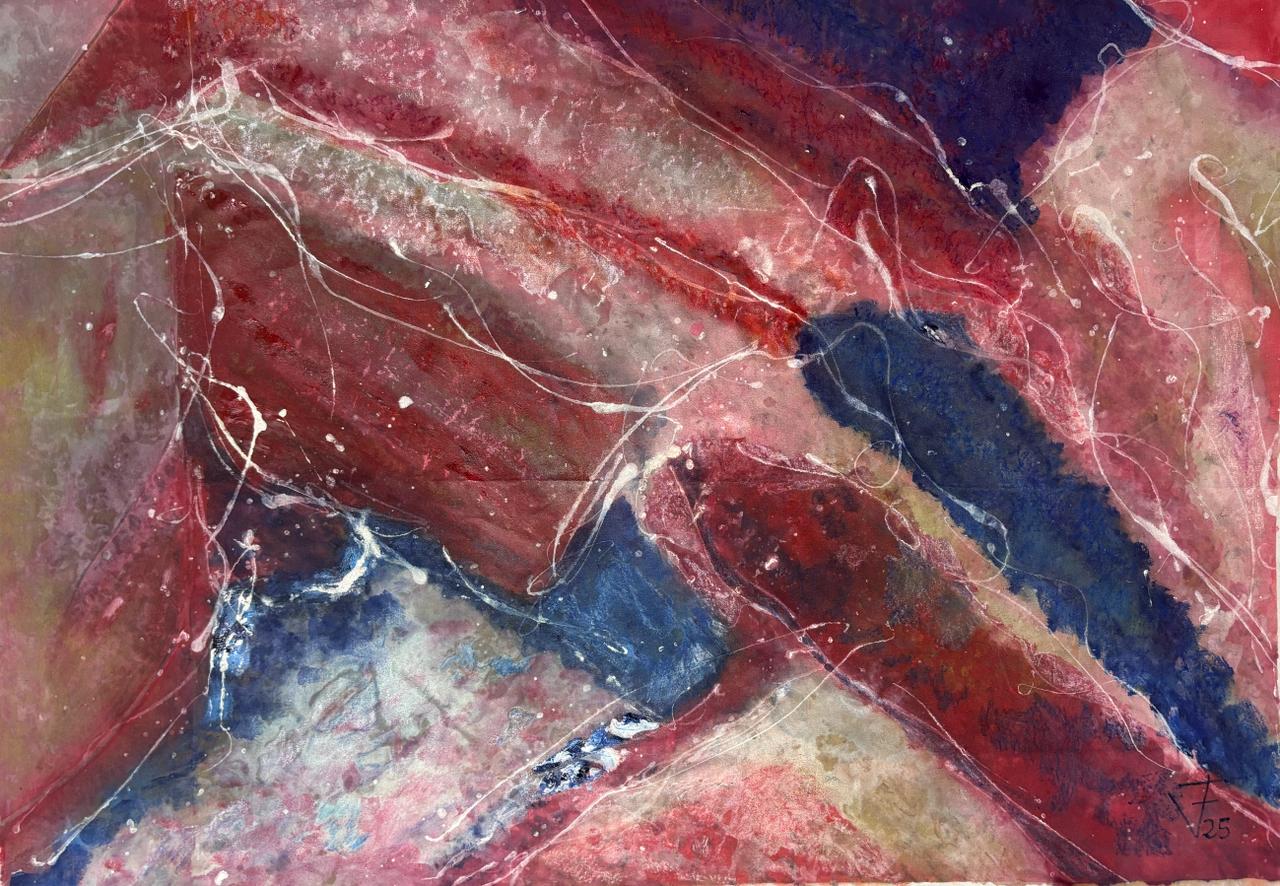
Análise Técnica A obra "RED AND BLUE STRIPS" é uma tela de dimensões consideráveis (93x138 cm), onde a composição é dominada por grandes massas de cor que se entrelaçam e se sobrepõem de forma dinâmica e abstrata. A paleta é predominantemente composta por tons de vermelho e azul, em clara alusão ao título e à bandeira dos Estados Unidos da América. O vermelho varia de tons vibrantes e saturados a nuances mais escuras e terrosas, enquanto o azul oscila entre um índigo profundo e áreas mais luminosas. O branco, aplicado em finas linhas e salpicos, desempenha um papel crucial, adicionando contraste, brilho e uma sensação de efervescência. Há também a presença sutil de tons de cinza, ocre ou amarelo pálido, que emergem do canvas não preparado ou se misturam com as camadas de tinta, adicionando complexidade e nuances à paleta.
A técnica empregada é fundamental para a rica expressividade da obra. A tinta a óleo permite a sobreposição de camadas e a criação de opacidades variadas, enquanto o esmalte, o óleo de linhaça e a água rás contribuem para áreas com brilho, suavidade e escorrimentos fluidos. A presença do secador de cobalto sugere uma intenção de controlar o tempo de secagem, permitindo ao artista construir a obra com agilidade. O giz de cera colorido adiciona uma qualidade mais seca, linear e ligeiramente áspera, criando traços distintos que contrastam com a fluidez das tintas. O canvas não preparado interage com os materiais, absorvendo-os e permitindo que a tela em si contribua para a textura orgânica da obra, com seus grãos e irregularidades visíveis. Salpicos e gotejamentos (drips) são elementos texturais importantes, indicando um processo de aplicação enérgico e espontâneo. A luz na obra não é externa, mas parece emanar da própria interação das cores e materiais, com as áreas brancas atuando como focos de luminosidade.
Análise Conceitual O título "RED AND BLUE STRIPS" estabelece uma investigação conceitual profunda sobre a simbologia e a história da bandeira dos Estados Unidos da América, filtrada pela experiência pessoal do artista. A inspiração direta e central para a obra é a visita do artista ao Museu Nacional de História Americana e a oportunidade de ver a "Star-Spangled Banner". Este encontro não resultou em uma mera representação da bandeira, mas em uma tentativa de capturar a essência, a memória e a energia histórica contida naquele artefato. A "Star-Spangled Banner", com sua própria história de resiliência e o desgaste do tempo, parece ter influenciado a natureza textural e em camadas da obra. As "listras" não são perfeitas e rígidas, mas fluidas, sobrepostas, quase como se estivessem em movimento ou tivessem sido desgastadas por ventos e tempos, remetendo à bandeira que "ainda estava lá" após o bombardeio.
A escolha de mídias como tinta a óleo, esmalte, água rás, secador de cobalto e óleo de linhaça sobre um canvas não preparado sugere um processo de experimentação e uma busca por uma expressividade que transcende a representação figurativa. A mistura de materiais, com suas diferentes propriedades de secagem, brilho e fluidez, reflete a complexidade e as múltiplas camadas da história. O giz de cera colorido, com sua qualidade mais direta e primária, pode simbolizar uma memória ou uma impressão indelével, um traço fundamental que permanece. A obra convida o espectador a sentir a história, a tensão e a beleza da bandeira americana, não como um objeto estático, mas como um símbolo vivo, dinâmico e em constante evolução. É uma interpretação visceral e emocional de um ícone nacional, onde o abstracionismo permite uma liberdade de expressão que explora a profundidade do significado cultural e pessoal.
Análise Estilística Estilisticamente, "RED AND BLUE STRIPS" insere-se na corrente da abstração gestual, com forte ressonância do Expressionismo Abstrato e da Action Painting. A obra dialoga com a arte que busca transcender a representação literal para atingir uma verdade mais profunda e visceral, como fazem artistas que exploram a materialidade da tinta e a gestualidade para expressar a essência de um lugar ou fenômeno. A ênfase na energia do processo, o uso de pinceladas e derrames espontâneos, e a exploração da cor para evocar estados emocionais ou conceituais são características marcantes.
A composição "all-over", onde não há um ponto focal central e a energia se distribui por toda a tela, remete à forma como a própria história se desenrola – sem um centro único, mas com uma profusão de detalhes interconectados. Essa abordagem estilística permite que a obra seja uma homenagem poderosa e imersiva à bandeira e à sua história, transcendendo a representação documental para capturar sua atmosfera e dinamismo inerentes. O grande formato da tela amplifica a sensação de imersão, convidando o espectador a se perder na vastidão dos significados e na riqueza textural da obra, em vez de apenas observá-la. A maneira como a luz e a cor são manipuladas, desconsiderando a realidade física em prol do impacto poético, é uma característica expressionista de priorizar a expressão interna sobre a representação externa.
ENGLISH
Technical Analysis The artwork "RED AND BLUE STRIPS" is a canvas of considerable dimensions (93x138 cm), where the composition is dominated by large masses of color that intertwine and overlap in a dynamic and abstract manner. The palette is predominantly composed of red and blue tones, in clear allusion to the title and the flag of the United States of America. Red varies from vibrant and saturated tones to darker, earthier hues, while blue oscillates between a deep indigo and brighter areas. White, applied in thin lines and splatters, plays a crucial role, adding contrast, brightness, and a sense of effervescence. There is also the subtle presence of gray, ochre, or pale yellow tones, emerging from the unprepared canvas or blending with the paint layers, adding complexity and nuances to the palette.
The technique employed is fundamental to the artwork's rich expressiveness. Oil paint allows for layering and the creation of varied opacities, while enamel, linseed oil, and turpentine contribute to areas with gloss, smoothness, and fluid drips. The presence of cobalt drier suggests an intention to control drying time, allowing the artist to build the work with agility. Colored crayon adds a drier, linear, and slightly rougher quality, creating distinct marks that contrast with the fluidity of the paints. The unprepared canvas interacts with the materials, absorbing them and allowing the canvas itself to contribute to the organic texture of the work, with its visible grains and irregularities. Splatters and drips are important textural elements, indicating an energetic and spontaneous application process. Light in the artwork is not external but seems to emanate from the interaction of colors and materials themselves, with white areas acting as focal points of luminosity.
Conceptual Analysis The title "RED AND BLUE STRIPS" establishes a profound conceptual investigation into the symbolism and history of the United States flag, filtered through the artist's personal experience. The direct and central inspiration for the artwork is the artist's visit to the National Museum of American History and the opportunity to see the "Star-Spangled Banner." This encounter did not result in a mere depiction of the flag but an attempt to capture the essence, memory, and historical energy contained within that artifact. The "Star-Spangled Banner," with its own history of resilience and the wear of time, seems to have influenced the textural and layered nature of the artwork. The "strips" are not perfect and rigid, but fluid, overlapping, almost as if in motion or weathered by winds and time, harkening back to the flag that was "still there" after the bombardment.
The choice of media such as oil paint, enamel, turpentine, cobalt drier, and linseed oil on an unprepared canvas suggests a process of experimentation and a search for an expressiveness that transcends figurative representation. The blend of materials, with their differing drying properties, sheen, and fluidity, reflects the complexity and multiple layers of history. The colored crayon, with its more direct and primary quality, might symbolize a memory or an indelible impression, a fundamental trace that remains. The artwork invites the viewer to feel the history, tension, and beauty of the American flag, not as a static object, but as a living, dynamic, and evolving symbol. It is a visceral and emotional interpretation of a national icon, where abstraction allows for a freedom of expression that explores the depth of cultural and personal meaning.
Stylistic Analysis Stylistically, "RED AND BLUE STRIPS" falls within the current of gestural abstraction, with strong resonance from Abstract Expressionism and Action Painting. The work dialogues with art that seeks to transcend literal representation to achieve a deeper, more visceral truth, much like artists who explore the materiality of paint and gesturality to express the essence of a place or phenomenon. The emphasis on the energy of the process, the use of spontaneous brushstrokes and pours, and the exploration of color to evoke emotional or conceptual states are prominent characteristics.
The "all-over" composition, where there is no central focal point and energy is distributed throughout the canvas, reflects how history itself unfolds – without a single center, but with a profusion of interconnected details. This stylistic approach allows the artwork to be a powerful and immersive homage to the flag and its history, transcending documentary representation to capture its inherent atmosphere and dynamism. The large format of the canvas amplifies the sense of immersion, inviting the viewer to get lost in the vastness of meanings and the textural richness of the work, rather than just observing it. The way light and color are manipulated, disregarding physical reality for poetic impact, is an expressionistic characteristic of prioritizing internal expression over external representation.
Produtos relacionados

A Galeria Margot nasceu do olhar sensível e da jornada pessoal do médico e artista plástico Fábio Teixeira. Fundada como um espaço de expressão e resiliência, a galeria celebra a arte contemporânea em suas diversas formas, refletindo a paixão de seu idealizador por cores, texturas e a capacidade transformadora da criação artística. Mais que uma galeria, é um lugar onde a arte floresce como um legado de amor e superação.


Galeria Margot - CPF: 543.143.139-00 © Todos os direitos reservados. 2026
