


-
- 1x de R$ 3.500,00 sem juros
- 2x de R$ 1.750,00 sem juros
- 3x de R$ 1.166,66 sem juros
- 4x de R$ 875,00 sem juros
- 5x de R$ 700,00 sem juros
- 6x de R$ 583,33 sem juros
- 7x de R$ 500,00 sem juros
- 8x de R$ 437,50 sem juros
- 9x de R$ 388,88 sem juros
- 10x de R$ 350,00 sem juros
- 11x de R$ 318,18 sem juros
- 12x de R$ 291,66 sem juros
-
R$ 3.500,00

-
R$ 3.500,00

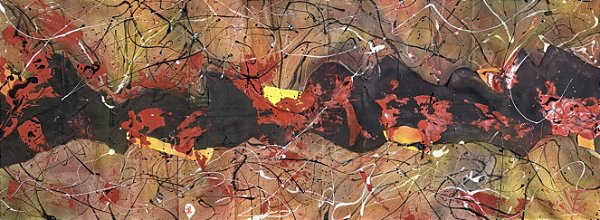
Análise Técnica A escolha dos materiais é, em si, um ato de rebeldia e um testemunho da urgência. O esmalte, com sua natureza industrial e seu brilho cortante, misturado a secador de cobalto, água rás e terebentina, não busca a sutileza do óleo, mas a imediatidade, a agressão corrosiva que a situação exige. Sobre o canvas não preparado de 400g, a tinta não repousa; ela se infiltra, mancha, brada, como o sangue derramado que impregna o asfalto. A aspereza do suporte, a gramatura pesada, confere à obra uma densidade e uma resistência que ecoam o peso da opressão e a resiliência do espírito humano.
A descrição dos materiais — óleo, esmalte e mídia mista sobre um canvas não preparado de 400g, com desenho abstrato que parece pintado com carvão e as intrigantes "múltiplas faces misturadas a campos coloridos" — já nos revela uma complexidade que promete uma experiência artística visceral e multifacetada.
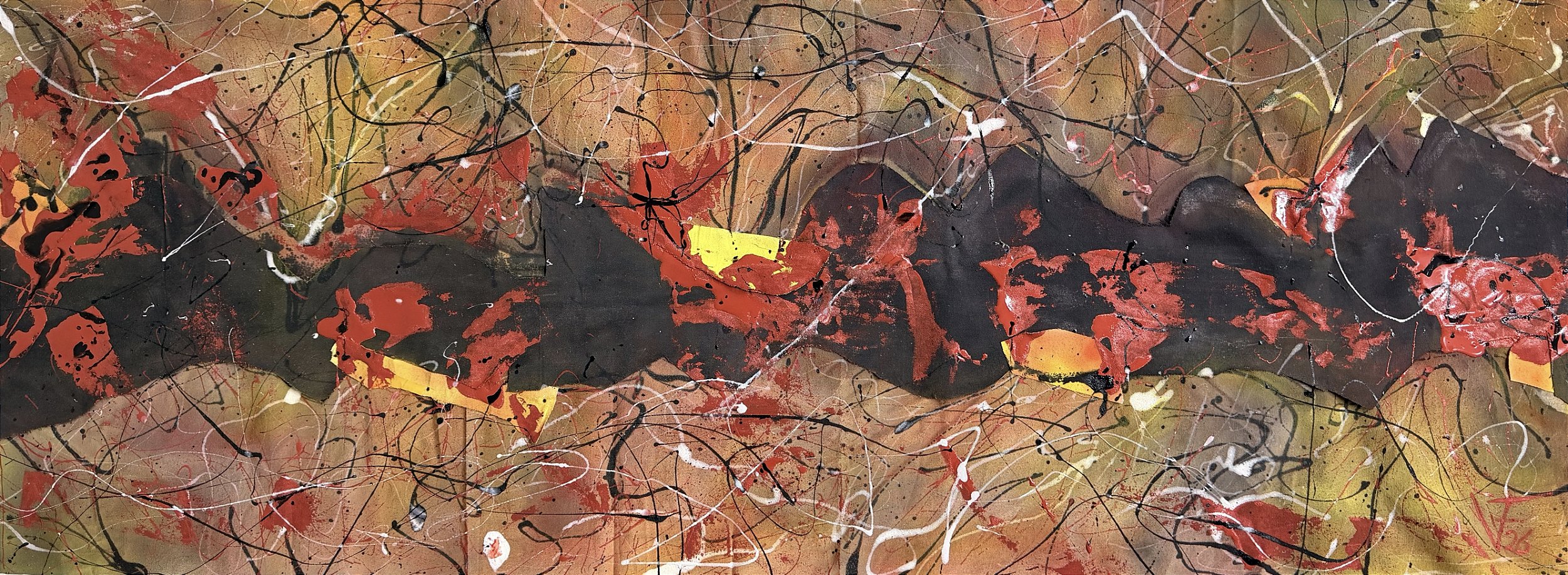
A construção da tela, duas partes costuradas à mão para formar as dimensões imponentes de 64x164 cm, não é um mero detalhe técnico, mas o próprio cerne da metáfora. Uma cicatriz no corpo da obra, a costura, é então brutalmente coberta por uma faixa de canvas não preparado pintada com esmalte, elevada, criando uma ferida tridimensional que divide o espaço pictórico. Esta linha de elevação é a fronteira simbólica e palpável entre duas realidades irreconciliáveis: de um lado, a sombra densa e sufocante da civilização arcaica, retrógrada, do regime iraniano teocrático; do outro, a vitalidade pulsante de um povo que anseia pela liberdade individual, que trabalha, que luta, mesmo sob a ameaça constante da morte. Não é uma divisão nítida e limpa, mas uma linha de batalha, sangrenta e irregular, que serpenteia pelo coração da composição, uma rachadura sísmica que expõe a dor.
As cores falam uma linguagem universal de sofrimento e resistência. O vermelho, onipresente e visceral, é o sangue que jorra nas ruas de Teerã, o sacrifício dos jovens massacrados, a paixão indomável da revolta e o perigo iminente. Ele explode em manchas e salpicos, um Pollock visceral que se recusa a ser meramente estético, clamando por justiça com cada gota de tinta. O preto, pesado e dominante na faixa central e em áreas adjacentes, não é apenas a ausência de luz, mas a presença sufocante do regime assassino, a escuridão da opressão, o luto avassalador. Os toques de amarelo e laranja, embora escassos, irrompem como faíscas de esperança ou a chama incandescente da resistência, pequenos focos de luz e vida na paisagem desoladora. Os respingos frenéticos de preto e branco por toda a superfície não são aleatórios; são o caos da violência, a voz de muitos que não podem gritar, o ruído ensurdecedor de uma nação em agonia, o entrelaçamento do destino individual com a violência sistêmica.
Análise Conceitual "BLOOD IN THE STREETS" não é uma representação, mas uma performance encapsulada na tela. É o grito silencioso daqueles cujas vozes foram obliteradas, uma súplica desesperada ao "mundo civilizado" que, como a obra sugere, apenas assiste, inerte, ao massacre que se desenrola nas primeiras semanas de janeiro de 2026. A urgência da data injeta uma profecia sombria, um aviso de que o tempo para agir é agora, antes que a tinta seque e a indiferença se torne uma lápide permanente. Esta obra é mais do que arte; é um manifesto, uma acusação, um apelo à consciência global, uma expressão crua e brutal da dor que se recusa a ser esquecida, uma pintura que sangra pela humanidade.
Análise Estilística Esta obra se posiciona de forma inequivocamente potente dentro do panorama do Expressionismo, reinterpreta seus fundamentos e os projeta para uma contemporaneidade de sensações. A premissa fundamental não é a busca pelo belo convencional ou pela fidelidade mimética, mas sim pela verdade visceral, pela angústia existencial e pela intensidade das emoções que permeiam a condição humana.
Esta obra se insere de forma vibrante e energética na corrente expressionista, movimento que, desde suas origens no início do século XX, buscou deliberadamente transcender a mera representação objetiva da realidade em favor de uma expressão intensa e profunda da experiência interior do artista.
ENGLISH
🎨 OBRA 0203: BLOOD IN THE STREETS (2026)
SKU: NG276HF98
Year of creation: 2026
Dimensions: 64x164cm
Technique Enamel, mixed media (cobalt drier, mineral spirits and turpentine) on 400g unprepared canvas. Made with 2 individual canvases sewn together to form a 64x164 cm canvas. A canvas divider was glued over the seam line.
Price: R$ 3500,00
Status: available
In the vibrant, visceral abyss of "BLOOD IN THE STREETS," the artist does not merely paint; they lacerate the canvas with the raw truth of an unbearable reality, transforming the materiality of art into a pulsating mirror of human tragedy. As an Abstract Expressionist critic, I see here the culmination of profound anguish, expressed not in figures, but in gestures, in color, in texture — in pure emotion. It is the language of the unconscious, of collective trauma, distilled into a form that impacts us before we can even rationalize it.
Technical Analysis The choice of materials is, in itself, an act of rebellion and a testament to urgency. Enamel, with its industrial nature and sharp sheen, mixed with cobalt dryer, mineral spirits, and turpentine, does not seek the subtlety of oil but rather immediacy, the corrosive aggression that the situation demands. On the unprepared 400g canvas, the paint does not rest; it infiltrates, stains, shouts, like spilt blood soaking into the asphalt. The roughness of the support, its heavy grammage, imbues the work with a density and resilience that echo the weight of oppression and the tenacity of the human spirit.
The description of materials — oil, enamel, and mixed media on an unprimed 400g canvas, with an abstract charcoal drawing and intriguing "multiple faces mixed with colored fields" — already reveals a complexity that promises a visceral and multifaceted artistic experience.
The construction of the canvas, two parts hand-sewn together to form the imposing dimensions of 64x164 cm, is not a mere technical detail but the very core of the metaphor. A scar on the body of the work, this seam is then brutally covered by a painted strip of unprepared canvas, elevated, creating a three-dimensional wound that divides the pictorial space. This raised line is the symbolic and palpable frontier between two irreconcilable realities: on one side, the dense, suffocating shadow of an archaic, retrograde civilization of the Iranian theocratic regime; on the other, the pulsating vitality of a people yearning for individual liberty, who work, who fight, even under the constant threat of death. It is not a clean, neat division, but a bloody, irregular battle line that snakes through the heart of the composition, a seismic crack exposing the pain.
The colors speak a universal language of suffering and resistance. The omnipresent and visceral red is the blood flowing in the streets of Tehran, the sacrifice of massacred youths, the untamed passion of revolt, and the imminent danger. It explodes in splotches and splatters, a visceral Pollock refusing to be merely aesthetic, screaming for justice with every drop of paint. Black, heavy and dominant in the central band and adjacent areas, is not just the absence of light, but the suffocating presence of the murderous regime, the darkness of oppression, overwhelming mourning. Touches of yellow and orange, though sparse, erupt like sparks of hope or the incandescent flame of resistance, small foci of light and life in the desolate landscape. The frantic black and white drips across the entire surface are not random; they are the chaos of violence, the voices of many who cannot scream, the deafening noise of a nation in agony, the intertwining of individual fate with systemic violence.
Conceptual Analysis "BLOOD IN THE STREETS" is not a representation, but a performance encapsulated on canvas. It is the silent scream of those whose voices have been obliterated, a desperate plea to the "civilized world" which, as the work suggests, merely watches, inert, as the massacre unfolds in the first weeks of January 2026. The urgency of the date injects a somber prophecy, a warning that the time to act is now, before the paint dries and indifference becomes a permanent tombstone. This work is more than art; it is a manifesto, an accusation, an appeal to global conscience, a raw and brutal expression of pain that refuses to be forgotten, a painting that bleeds for humanity.
The description of "multiple faces mixed with colored fields" is the central nerve of this work's expressionist meaning, revealing the complexity of human experience.
Stylistic Analysis This work unequivocally positions itself powerfully within the Expressionism landscape, reinterpreting its foundations and projecting them into a contemporary sensation. The fundamental premise is not the pursuit of conventional beauty or mimetic fidelity, but rather visceral truth, existential anguish, and the intensity of emotions that permeate the human condition.
This work dynamically and energetically inserts itself into the Expressionist current, a movement that, since its origins in the early 20th century, deliberately sought to transcend mere objective representation of reality in favor of an intense and profound expression of the artist's inner experience.
Produtos relacionados

A Galeria Margot nasceu do olhar sensível e da jornada pessoal do médico e artista plástico Fábio Teixeira. Fundada como um espaço de expressão e resiliência, a galeria celebra a arte contemporânea em suas diversas formas, refletindo a paixão de seu idealizador por cores, texturas e a capacidade transformadora da criação artística. Mais que uma galeria, é um lugar onde a arte floresce como um legado de amor e superação.


Galeria Margot - CPF: 543.143.139-00 © Todos os direitos reservados. 2026
