


PORTUGUÊS
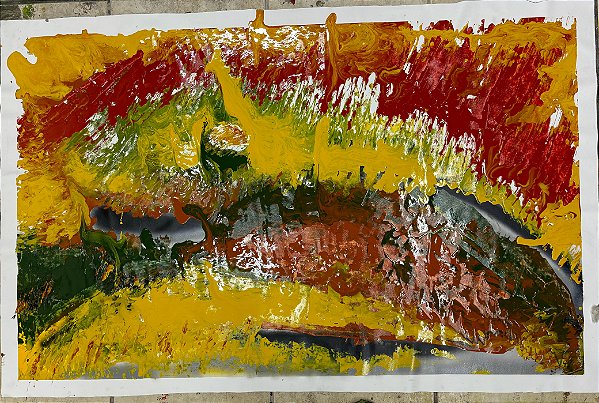
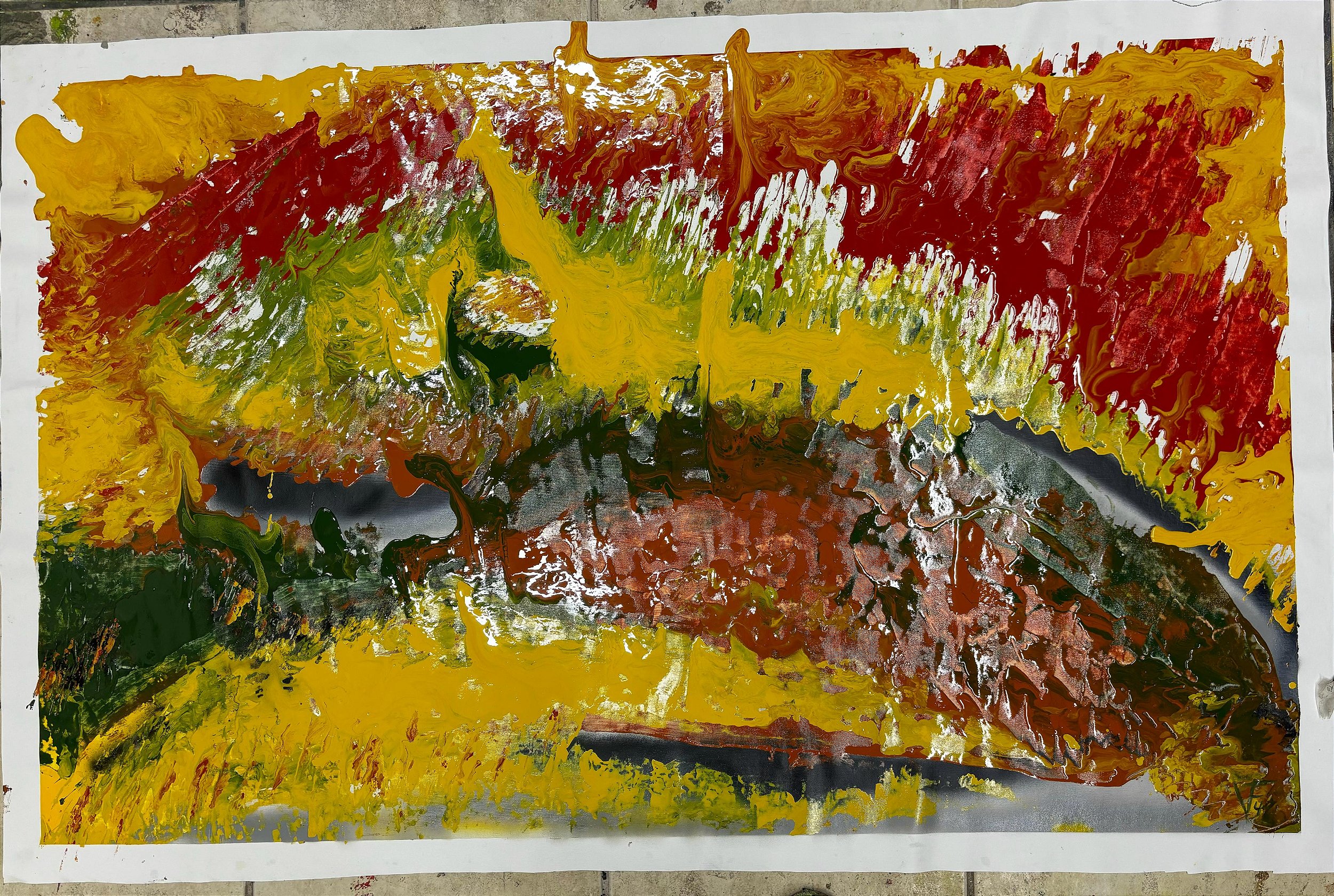
"BRAZILIAN BURNING FOREST" emerge como uma obra magistral do expressionismo ambiental contemporâneo com influências da arte política e da pintura de paisagem distópica. Esta tela de formato panorâmico monumental (92 x 180 cm) captura com extraordinária potência visual a tragédia ecológica das queimadas na floresta brasileira, transformando um fenômeno de devastação ambiental em uma experiência pictórica visceral e emocionalmente avassaladora. O artista emprega uma técnica mista sofisticada, combinando óleo, esmalte e outros materiais sobre canvas para criar uma superfície onde cada pincelada, gotejamento e textura evoca simultaneamente a beleza sublime da floresta e o horror apocalíptico de sua destruição pelo fogo, estabelecendo um diálogo visual tenso entre criação e aniquilação.
A composição é estruturada como um vasto panorama horizontal que se estende além dos limites da percepção imediata, convidando o olhar do espectador a percorrer a extensão da tela como quem testemunha a progressão inexorável de um incêndio florestal. Os vermelhos e laranjas incandescentes dominam o centro e a porção direita da composição, representando o avanço voraz das chamas, enquanto verdes profundos e vibrantes na porção esquerda evocam a floresta ainda intacta, criando uma narrativa visual de transformação e perda. Particularmente notável é a técnica de contraste entre áreas de densidade cromática variável, onde a exuberância vertical da vegetação é gradualmente consumida pela horizontalidade caótica do fogo, sugerindo não apenas a destruição física, mas a substituição de um sistema de vida por outro. O formato panorâmico da tela amplifica o impacto dramático da composição, evocando a vastidão da floresta brasileira e a escala monumental de sua devastação.
A paleta cromática empregada pelo artista é simultaneamente naturalista e expressionista, ancorada nos tons que associamos tanto à floresta tropical quanto ao fogo - verdes exuberantes, marrons terrosos, vermelhos e laranjas incandescentes, negros carbonizados e cinzas fantasmagóricos. Esta abordagem cromática estabelece um diálogo visual entre vida e morte, entre a biodiversidade cromática da floresta e a monocromia devastadora do fogo. Particularmente impactante é o tratamento da fumaça, representada através de veladuras translúcidas de cinza e branco que pairam sobre a composição como um sudário, obscurecendo parcialmente tanto a floresta quanto as chamas, evocando não apenas a realidade física das queimadas, mas também a maneira como este fenômeno é frequentemente obscurecido ou velado no discurso público. A incorporação de elementos de mídia mista adiciona dimensão tátil e referencial à superfície, possivelmente incluindo materiais orgânicos ou resíduos que estabelecem uma conexão material direta com o tema representado.
O título "BRAZILIAN BURNING FOREST" opera como uma declaração direta e sem ambiguidades, localizando geograficamente e politicamente a devastação representada. Na tradição da arte engajada, esta obra se posiciona não apenas como representação estética, mas como testemunho e denúncia de uma catástrofe ecológica específica com implicações globais. A escolha de palavras no título - particularmente o uso do gerúndio "burning" ao invés do adjetivo "burnt" - enfatiza a natureza contínua e presente desta devastação, sugerindo que não estamos diante de um evento histórico concluído, mas de um processo ativo que exige atenção e intervenção imediatas. Esta temporalidade urgente estabelece um diálogo direto com o espectador, convocando-o não apenas à contemplação estética, mas à conscientização e potencialmente à ação.
Esta obra transcende categorias estilísticas convencionais para se estabelecer como uma contribuição significativa tanto à arte contemporânea brasileira quanto ao diálogo global sobre a crise climática e ambiental. Ao transformar a devastação da floresta brasileira em uma expressão visual de extraordinária potência emocional e política, o artista nos convida a reconsiderar nossa relação com este ecossistema vital - não apenas como recurso natural ou patrimônio nacional, mas como sistema de vida do qual dependemos coletivamente. "BRAZILIAN BURNING FOREST" estabelece-se assim como uma obra que é simultaneamente lamento elegíaco pela destruição em curso, denúncia política das forças que a perpetuam e chamado urgente à consciência ecológica global. Em um momento histórico onde a Amazônia e outras florestas brasileiras enfrentam ameaças sem precedentes, esta pintura emerge não apenas como representação, mas como ato de resistência visual e testemunho para as gerações futuras.
ENGLISH
"BRAZILIAN BURNING FOREST" emerges as a masterful work of contemporary environmental expressionism with influences from political art and dystopian landscape painting. This monumental panoramic canvas (92 x 180 cm) captures with extraordinary visual power the ecological tragedy of fires in the Brazilian forest, transforming a phenomenon of environmental devastation into a visceral and emotionally overwhelming pictorial experience. The artist employs a sophisticated mixed technique, combining oil, enamel, and other materials on canvas to create a surface where each brushstroke, drip, and texture simultaneously evokes the sublime beauty of the forest and the apocalyptic horror of its destruction by fire, establishing a tense visual dialogue between creation and annihilation.
The composition is structured as a vast horizontal panorama that extends beyond the limits of immediate perception, inviting the viewer's gaze to travel the extent of the canvas as one who witnesses the inexorable progression of a forest fire. Incandescent reds and oranges dominate the center and right portion of the composition, representing the voracious advance of the flames, while deep and vibrant greens in the left portion evoke the still intact forest, creating a visual narrative of transformation and loss. Particularly notable is the technique of contrast between areas of variable chromatic density, where the vertical exuberance of vegetation is gradually consumed by the chaotic horizontality of fire, suggesting not only physical destruction but the replacement of one life system by another. The panoramic format of the canvas amplifies the dramatic impact of the composition, evoking the vastness of the Brazilian forest and the monumental scale of its devastation.
The chromatic palette employed by the artist is simultaneously naturalistic and expressionistic, anchored in the tones we associate with both the tropical forest and fire - exuberant greens, earthy browns, incandescent reds and oranges, carbonized blacks, and ghostly grays. This chromatic approach establishes a visual dialogue between life and death, between the chromatic biodiversity of the forest and the devastating monochrome of fire. Particularly impactful is the treatment of smoke, represented through translucent glazes of gray and white that hover over the composition like a shroud, partially obscuring both the forest and the flames, evoking not only the physical reality of the fires but also the way this phenomenon is often obscured or veiled in public discourse. The incorporation of mixed media elements adds tactile and referential dimension to the surface, possibly including organic materials or residues that establish a direct material connection with the represented theme.
The title "BRAZILIAN BURNING FOREST" operates as a direct and unambiguous statement, geographically and politically locating the devastation represented. In the tradition of engaged art, this work positions itself not only as aesthetic representation but as testimony and denunciation of a specific ecological catastrophe with global implications. The choice of words in the title - particularly the use of the gerund "burning" instead of the adjective "burnt" - emphasizes the continuous and present nature of this devastation, suggesting that we are not facing a concluded historical event, but an active process that demands immediate attention and intervention. This urgent temporality establishes a direct dialogue with the viewer, summoning them not only to aesthetic contemplation but to awareness and potentially to action.
This work transcends conventional stylistic categories to establish itself as a significant contribution to both contemporary Brazilian art and the global dialogue on the climate and environmental crisis. By transforming the devastation of the Brazilian forest into a visual expression of extraordinary emotional and political power, the artist invites us to reconsider our relationship with this vital ecosystem - not just as a natural resource or national heritage, but as a life system on which we collectively depend. "BRAZILIAN BURNING FOREST" thus establishes itself as a work that is simultaneously an elegiac lament for the ongoing destruction, a political denunciation of the forces that perpetuate it, and an urgent call to global ecological consciousness. In a historical moment where the Amazon and other Brazilian forests face unprecedented threats, this painting emerges not only as representation but as an act of visual resistance and testimony for future generations.
Produtos relacionados

A Galeria Margot nasceu do olhar sensível e da jornada pessoal do médico e artista plástico Fábio Teixeira. Fundada como um espaço de expressão e resiliência, a galeria celebra a arte contemporânea em suas diversas formas, refletindo a paixão de seu idealizador por cores, texturas e a capacidade transformadora da criação artística. Mais que uma galeria, é um lugar onde a arte floresce como um legado de amor e superação.



Galeria Margot - CPF: 543.143.139-00 © Todos os direitos reservados. 2026
