

-
- 1x de R$ 2.300,00 sem juros
- 2x de R$ 1.150,00 sem juros
- 3x de R$ 766,66 sem juros
- 4x de R$ 575,00 sem juros
- 5x de R$ 460,00 sem juros
- 6x de R$ 383,33 sem juros
- 7x de R$ 328,57 sem juros
- 8x de R$ 287,50 sem juros
- 9x de R$ 255,55 sem juros
- 10x de R$ 230,00 sem juros
- 11x de R$ 209,09 sem juros
- 12x de R$ 191,66 sem juros
-
R$ 2.300,00

-
R$ 2.300,00


PORTUGUÊS
Estilo e Linguagem Visual
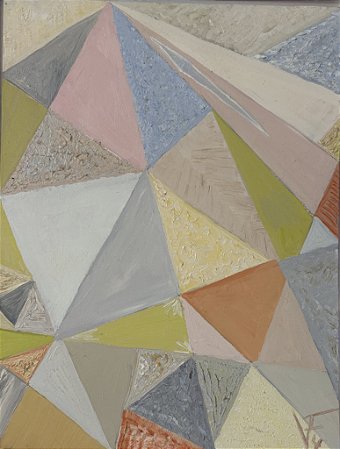
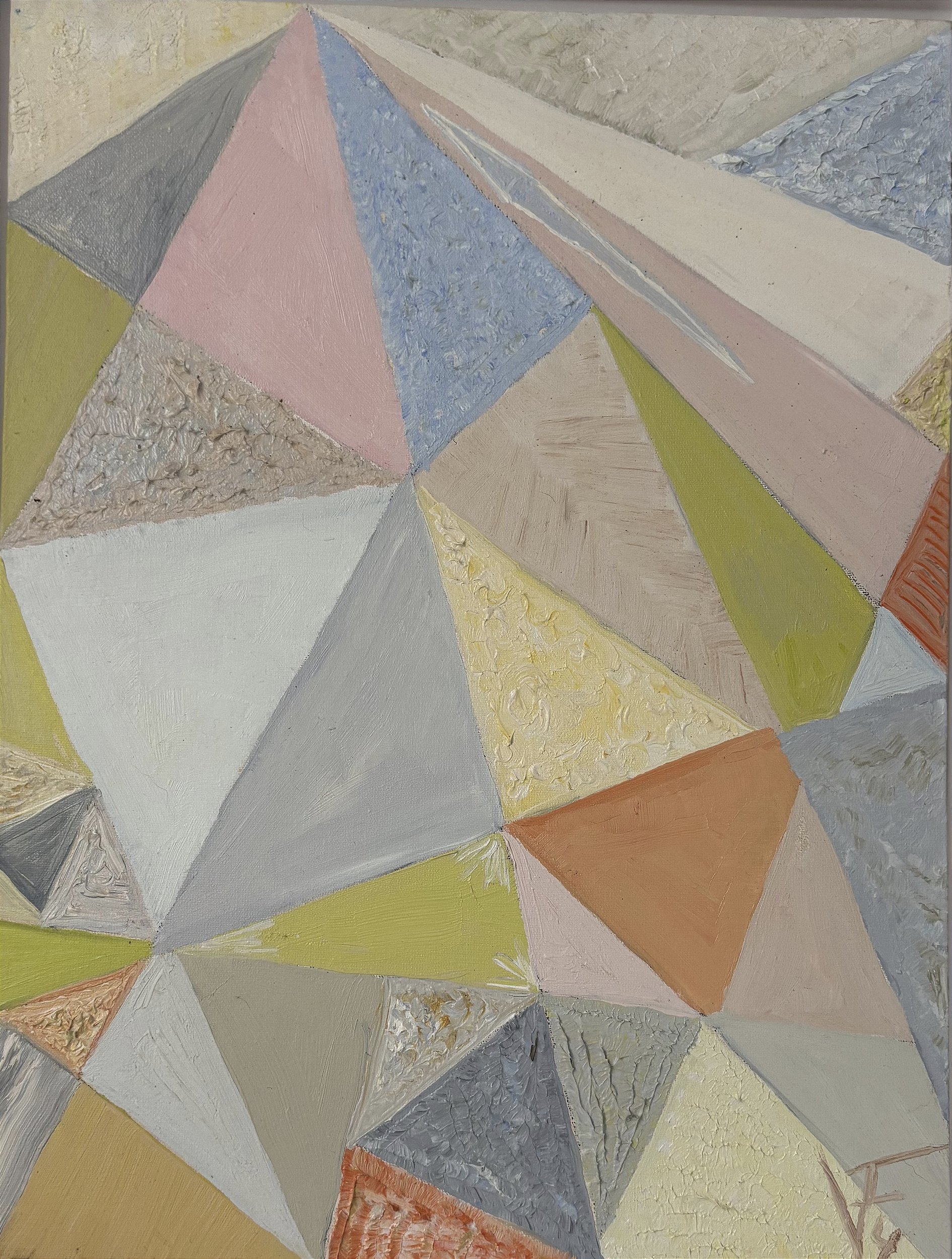
"TRINITY" se insere na tradição da abstração geométrica contemporânea, com claras influências do construtivismo e do suprematismo, porém suavizadas por uma sensibilidade lírica que humaniza a rigidez geométrica. Esta obra de 40 x 30 cm em óleo sobre tela apresenta uma composição dominada por formas triangulares que se entrelaçam e se sobrepõem, criando um jogo visual de planos e profundidades. A execução técnica revela uma abordagem que poderíamos classificar como "geometria sensível" ou "construtivismo lírico", onde a precisão das formas geométricas é deliberadamente contraposta por texturas táteis e transições cromáticas sutis. O artista estabelece um diálogo entre a racionalidade da geometria e a expressividade da pincelada, resultando em uma obra que transcende as categorias rígidas do abstracionismo geométrico tradicional.
Materialidade e Paleta Cromática
A superfície da obra revela um trabalho meticuloso com a materialidade da tinta a óleo, explorando suas possibilidades texturais e lumínicas. Áreas de impasto contrastam com zonas de maior transparência, criando uma topografia visual que responde dinamicamente à luz ambiente. A paleta cromática, dominada por tons pastel - rosa pálido, azul celeste, verde-água e amarelo suave - é pontuada por acentos terrosos que ancoram a composição e evitam que ela se dissolva em etereidade. Esta escolha cromática evoca tanto a leveza espiritual quanto a materialidade terrena, refletindo a dualidade implícita no título "TRINITY". As transições entre as cores são ora abruptas, definindo claramente os limites entre as formas triangulares, ora graduais, criando áreas de ambiguidade visual que convidam o olhar a demorar-se e a questionar os limites entre as formas.
Composição e Estrutura Visual
A composição de "TRINITY" é estruturada por um complexo sistema de triangulações que cria ritmos visuais e tensões dinâmicas. O arranjo aparentemente aleatório das formas triangulares revela, após observação mais atenta, uma ordem subjacente que organiza o espaço pictórico em zonas de maior e menor densidade. A convergência de múltiplos triângulos em pontos focais específicos cria centros de energia visual que funcionam como âncoras para o olhar errante do espectador. O equilíbrio entre formas angulares e transições suaves, entre geometria rígida e fluidez cromática, gera uma tensão produtiva que mantém a obra em constante vibração visual. Esta estrutura compositiva não apenas organiza o espaço bidimensional da tela, mas sugere uma expansão para além de seus limites físicos, como se estivéssemos vislumbrando apenas um fragmento de um padrão infinito.
Significado e Dimensão Simbólica
O título "TRINITY" estabelece imediatamente um campo semântico que orienta a interpretação da obra para dimensões metafísicas e espirituais. A tríade, presente em múltiplas tradições religiosas e filosóficas - da Santíssima Trindade cristã à tríade hegeliana de tese-antítese-síntese - funciona como um princípio organizador tanto visual quanto conceitual. Os triângulos, formas geometricamente perfeitas e simbolicamente carregadas, atuam como veículos para explorar conceitos de unidade na multiplicidade, de harmonia entre opostos, de transcendência através da forma. A obra pode ser lida como uma meditação visual sobre a natureza tripartite da existência - corpo, mente e espírito; passado, presente e futuro; matéria, energia e consciência. O tratamento sensível da geometria sugere que estas divisões, embora conceitualmente distintas, são experiencialmente fluidas e interdependentes.
Contextualização Contemporânea
"TRINITY" se insere no diálogo contemporâneo sobre a relevância da abstração geométrica em uma era dominada pela saturação de imagens digitais e pela fragmentação da experiência. A obra reafirma o poder da geometria como linguagem visual capaz de comunicar conceitos abstratos e experiências transcendentes, mas o faz através de uma abordagem que valoriza a materialidade, a textura e o gesto humano. Em um momento histórico marcado por polarizações e divisões, a integração harmoniosa de elementos contrastantes proposta pela obra oferece um modelo visual de reconciliação e síntese. A tensão produtiva entre ordem geométrica e expressão lírica, entre racionalidade e intuição, entre estrutura e fluidez, reflete dilemas fundamentais da condição contemporânea, propondo não uma resolução definitiva, mas um equilíbrio dinâmico e em constante renovação.
ENGLISH
Style and Visual Language
"TRINITY" fits within the tradition of contemporary geometric abstraction, with clear influences from constructivism and suprematism, yet softened by a lyrical sensibility that humanizes geometric rigidity. This 40 x 30 cm oil on canvas work presents a composition dominated by triangular forms that intertwine and overlap, creating a visual play of planes and depths. The technical execution reveals an approach that we could classify as "sensitive geometry" or "lyrical constructivism," where the precision of geometric forms is deliberately counterposed by tactile textures and subtle chromatic transitions. The artist establishes a dialogue between the rationality of geometry and the expressiveness of brushwork, resulting in a work that transcends the rigid categories of traditional geometric abstractionism.
Materiality and Chromatic Palette
The surface of the work reveals meticulous work with the materiality of oil paint, exploring its textural and luminous possibilities. Areas of impasto contrast with zones of greater transparency, creating a visual topography that dynamically responds to ambient light. The chromatic palette, dominated by pastel tones - pale pink, sky blue, aqua green, and soft yellow - is punctuated by earthy accents that anchor the composition and prevent it from dissolving into ethereality. This chromatic choice evokes both spiritual lightness and earthly materiality, reflecting the duality implicit in the title "TRINITY." The transitions between colors are sometimes abrupt, clearly defining the boundaries between triangular forms, and sometimes gradual, creating areas of visual ambiguity that invite the gaze to linger and question the limits between forms.
Composition and Visual Structure
The composition of "TRINITY" is structured by a complex system of triangulations that creates visual rhythms and dynamic tensions. The seemingly random arrangement of triangular forms reveals, upon closer observation, an underlying order that organizes the pictorial space into zones of greater and lesser density. The convergence of multiple triangles at specific focal points creates centers of visual energy that function as anchors for the wandering gaze of the viewer. The balance between angular forms and smooth transitions, between rigid geometry and chromatic fluidity, generates a productive tension that keeps the work in constant visual vibration. This compositional structure not only organizes the two-dimensional space of the canvas but suggests an expansion beyond its physical limits, as if we were glimpsing only a fragment of an infinite pattern.
Meaning and Symbolic Dimension
The title "TRINITY" immediately establishes a semantic field that orients the interpretation of the work toward metaphysical and spiritual dimensions. The triad, present in multiple religious and philosophical traditions - from the Christian Holy Trinity to the Hegelian triad of thesis-antithesis-synthesis - functions as an organizing principle both visual and conceptual. The triangles, geometrically perfect and symbolically charged forms, act as vehicles to explore concepts of unity in multiplicity, harmony between opposites, transcendence through form. The work can be read as a visual meditation on the tripartite nature of existence - body, mind, and spirit; past, present, and future; matter, energy, and consciousness. The sensitive treatment of geometry suggests that these divisions, although conceptually distinct, are experientially fluid and interdependent.
Contemporary Contextualization
"TRINITY" inserts itself into the contemporary dialogue about the relevance of geometric abstraction in an era dominated by the saturation of digital images and the fragmentation of experience. The work reaffirms the power of geometry as a visual language capable of communicating abstract concepts and transcendent experiences, but does so through an approach that values materiality, texture, and human gesture. In a historical moment marked by polarizations and divisions, the harmonious integration of contrasting elements proposed by the work offers a visual model of reconciliation and synthesis. The productive tension between geometric order and lyrical expression, between rationality and intuition, between structure and fluidity, reflects fundamental dilemmas of the contemporary condition, proposing not a definitive resolution, but a dynamic equilibrium in constant renewal.

A Galeria Margot nasceu do olhar sensível e da jornada pessoal do médico e artista plástico Fábio Teixeira. Fundada como um espaço de expressão e resiliência, a galeria celebra a arte contemporânea em suas diversas formas, refletindo a paixão de seu idealizador por cores, texturas e a capacidade transformadora da criação artística. Mais que uma galeria, é um lugar onde a arte floresce como um legado de amor e superação.


Galeria Margot - CPF: 543.143.139-00 © Todos os direitos reservados. 2026
