

-
- 1x de R$ 3.250,00 sem juros
- 2x de R$ 1.625,00 sem juros
- 3x de R$ 1.083,33 sem juros
- 4x de R$ 812,50 sem juros
- 5x de R$ 650,00 sem juros
- 6x de R$ 541,66 sem juros
- 7x de R$ 464,28 sem juros
- 8x de R$ 406,25 sem juros
- 9x de R$ 361,11 sem juros
- 10x de R$ 325,00 sem juros
- 11x de R$ 295,45 sem juros
- 12x de R$ 270,83 sem juros
-
R$ 3.250,00

-
R$ 3.250,00


PORTUGUÊS
Estilo e Linguagem Visual
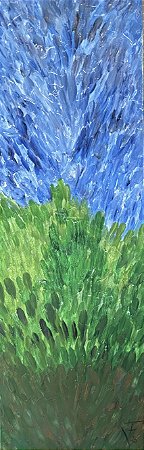
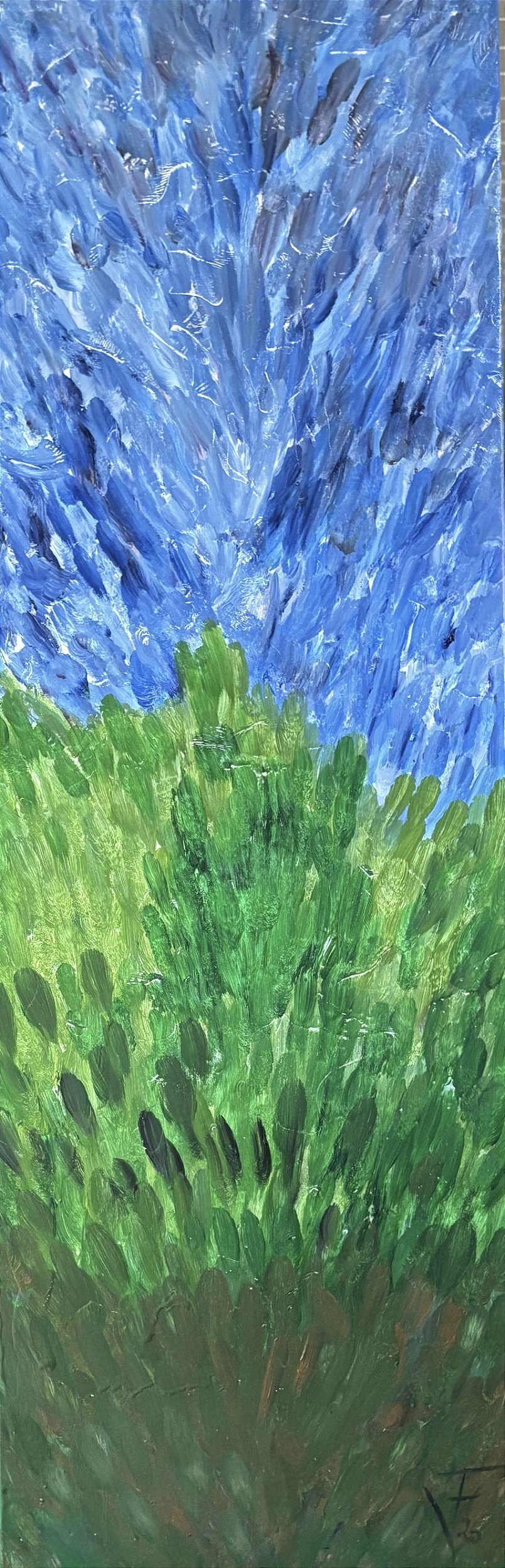
"THE WOODS" apresenta-se como uma obra emblemática do neo-expressionismo contemporâneo, com fortes influências do abstracionismo lírico e da tradição romântica do sublime natural. Com suas dimensões imponentes de 150 x 49 cm, o formato verticalmente alongado evoca imediatamente a experiência de contemplar árvores majestosas ou de adentrar uma floresta densa. A combinação técnica de óleo, mídia mista e esmalte sobre tela permite ao artista explorar diferentes qualidades materiais e visuais, criando uma superfície rica em contrastes e profundidades. A verticalidade pronunciada da obra não apenas reflete literalmente a forma das árvores, mas também sugere uma aspiração espiritual, um movimento ascendente que conecta o terreno ao celestial, característica fundamental do sublime na arte.
Materialidade e Técnica Pictórica
A superfície da obra revela uma magistral exploração das possibilidades materiais da pintura contemporânea. As camadas sobrepostas de tinta a óleo conferem profundidade atmosférica, enquanto o esmalte cria áreas de reflexão luminosa que contrastam com a opacidade de outros elementos. A paleta cromática dominada por azuis profundos na parte superior e verdes intensos na inferior estabelece uma clara divisão entre céu e vegetação, embora a transição entre estes domínios seja fluida e atmosférica. As pinceladas vigorosas e expressivas na seção verde inferior sugerem a densidade orgânica do sub-bosque, enquanto os movimentos mais amplos e circulares na seção azul superior evocam a dinâmica atmosférica do céu visto através da copa das árvores. A assinatura "F 25" indica uma obra recente, possivelmente de 2025, situando-a no contexto da revitalização contemporânea da pintura de paisagem.
Composição e Dinâmica Visual
A composição de "THE WOODS" é estruturada por uma poderosa tensão entre ordem e caos, contenção e expansão. A orientação vertical dominante é contraposta por movimentos horizontais e diagonais que criam ritmo e dinamismo visual. A divisão entre o azul celeste e o verde terrestre não é uma simples linha horizontal, mas uma fronteira complexa e permeável, sugerindo a interdependência destes reinos naturais. Pontos de intensidade cromática funcionam como focos visuais que guiam o olhar do espectador em um movimento ascendente e descendente, replicando a experiência de contemplar uma floresta real, onde o olhar alterna entre o solo, os troncos, a folhagem e o céu. Esta estrutura compositiva cria uma experiência imersiva que transcende a bidimensionalidade da tela.
Significado e Interpretação Conceitual
"THE WOODS" opera simultaneamente em múltiplos níveis semânticos. No nível mais imediato, a obra captura a experiência fenomenológica de estar imerso em uma floresta densa - a sensação de envolvimento, mistério e descoberta gradual que caracteriza este encontro. Em um nível mais profundo, a pintura pode ser interpretada como uma meditação sobre a relação contemporânea entre humanidade e natureza - uma relação marcada tanto pela nostalgia de uma conexão perdida quanto pela ansiedade ecológica do presente. A verticalidade pronunciada da composição evoca tanto a majestade das árvores quanto a pequenez humana diante delas, reativando o conceito romântico do sublime natural para o contexto da crise ambiental contemporânea. A técnica mista empregada pelo artista, combinando materiais tradicionais e industriais, espelha esta tensão entre o natural e o artificial.
Contextualização na Arte Contemporânea
"THE WOODS" se insere em um momento significativo da arte contemporânea, marcado pelo retorno ao engajamento com a natureza e com questões ecológicas urgentes. A obra dialoga com a tradição da pintura de paisagem, desde os românticos até os expressionistas abstratos, mas a atualiza para o contexto do século XXI, onde a floresta não é mais apenas um símbolo do sublime ou do primitivo, mas um ecossistema ameaçado cuja preservação se tornou imperativa cultural e existencial. A escolha do formato vertical incomum e a combinação de técnicas tradicionais com materiais contemporâneos demonstram como o artista navega entre tradição e inovação, criando uma obra que é simultaneamente enraizada na história da arte e urgentemente atual em suas preocupações e sensibilidade estética.
ENGLISH
Style and Visual Language
"THE WOODS" presents itself as an emblematic work of contemporary neo-expressionism, with strong influences from lyrical abstraction and the romantic tradition of the natural sublime. With its imposing dimensions of 150 x 49 cm, the vertically elongated format immediately evokes the experience of contemplating majestic trees or entering a dense forest. The technical combination of oil, mixed media, and enamel on canvas allows the artist to explore different material and visual qualities, creating a surface rich in contrasts and depths. The pronounced verticality of the work not only literally reflects the form of trees but also suggests a spiritual aspiration, an upward movement that connects the terrestrial to the celestial, a fundamental characteristic of the sublime in art.
Materiality and Pictorial Technique
The surface of the work reveals a masterful exploration of the material possibilities of contemporary painting. The overlapping layers of oil paint confer atmospheric depth, while the enamel creates areas of luminous reflection that contrast with the opacity of other elements. The chromatic palette dominated by deep blues in the upper part and intense greens in the lower establishes a clear division between sky and vegetation, although the transition between these domains is fluid and atmospheric. The vigorous and expressive brushstrokes in the lower green section suggest the organic density of the undergrowth, while the broader and circular movements in the upper blue section evoke the atmospheric dynamics of the sky seen through the tree canopy. The signature "F 25" indicates a recent work, possibly from 2025, situating it in the context of the contemporary revitalization of landscape painting.
Composition and Visual Dynamics
The composition of "THE WOODS" is structured by a powerful tension between order and chaos, containment and expansion. The dominant vertical orientation is counterposed by horizontal and diagonal movements that create rhythm and visual dynamism. The division between celestial blue and terrestrial green is not a simple horizontal line but a complex and permeable boundary, suggesting the interdependence of these natural realms. Points of chromatic intensity function as visual focal points that guide the viewer's gaze in an ascending and descending movement, replicating the experience of contemplating a real forest, where the gaze alternates between the ground, the trunks, the foliage, and the sky. This compositional structure creates an immersive experience that transcends the two-dimensionality of the canvas.
Meaning and Conceptual Interpretation
"THE WOODS" operates simultaneously on multiple semantic levels. At the most immediate level, the work captures the phenomenological experience of being immersed in a dense forest - the sensation of involvement, mystery, and gradual discovery that characterizes this encounter. At a deeper level, the painting can be interpreted as a meditation on the contemporary relationship between humanity and nature - a relationship marked both by nostalgia for a lost connection and by the ecological anxiety of the present. The pronounced verticality of the composition evokes both the majesty of trees and human smallness before them, reactivating the romantic concept of the natural sublime for the context of the contemporary environmental crisis. The mixed technique employed by the artist, combining traditional and industrial materials, mirrors this tension between the natural and the artificial.
Contextualization in Contemporary Art
"THE WOODS" is situated at a significant moment in contemporary art, marked by a return to engagement with nature and urgent ecological issues. The work dialogues with the tradition of landscape painting, from the romantics to the abstract expressionists, but updates it for the context of the 21st century, where the forest is no longer just a symbol of the sublime or the primitive, but a threatened ecosystem whose preservation has become a cultural and existential imperative. The choice of the unusual vertical format and the combination of traditional techniques with contemporary materials demonstrate how the artist navigates between tradition and innovation, creating a work that is simultaneously rooted in art history and urgently current in its concerns and aesthetic sensibility.

A Galeria Margot nasceu do olhar sensível e da jornada pessoal do médico e artista plástico Fábio Teixeira. Fundada como um espaço de expressão e resiliência, a galeria celebra a arte contemporânea em suas diversas formas, refletindo a paixão de seu idealizador por cores, texturas e a capacidade transformadora da criação artística. Mais que uma galeria, é um lugar onde a arte floresce como um legado de amor e superação.


Galeria Margot - CPF: 543.143.139-00 © Todos os direitos reservados. 2026
