

PORTUGUÊS
Estilo e Linguagem Visual
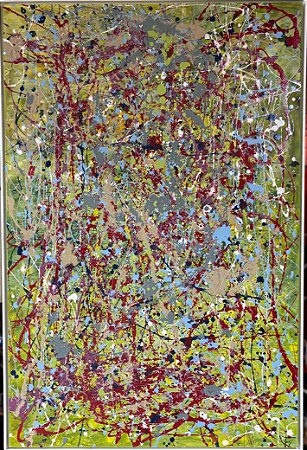
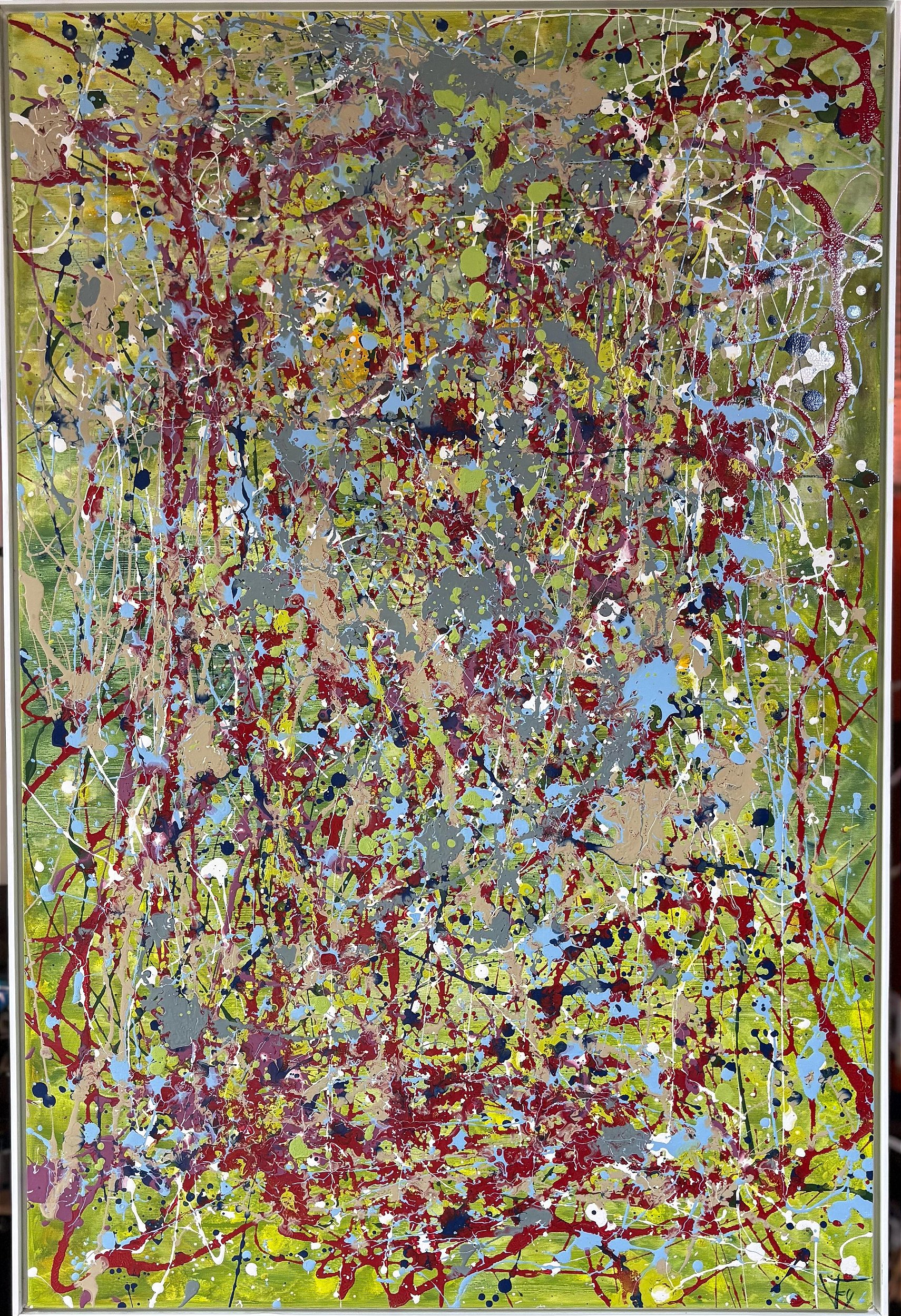
"THE FOREST IS BLEEDING" emerge como uma obra emblemática do que podemos denominar eco-expressionismo contemporâneo, uma vertente que funde a intensidade emocional do expressionismo abstrato com uma consciência ecológica urgente. Com suas dimensões imponentes de 120 x 80 cm, a obra impõe sua presença física ao espectador, criando uma experiência imersiva e visceral. A técnica mista empregada – combinando óleo, esmalte e outros materiais sobre tela – permite ao artista explorar diferentes qualidades texturais e visuais que metaforizam a complexidade do ecossistema florestal. Os escorrimentos deliberados de vermelho intenso, que dominam a composição vertical, evocam literalmente o sangramento mencionado no título, transformando a abstração em uma poderosa alegoria visual sobre a violência contra os sistemas naturais. Esta obra se insere na tradição dos "drip paintings" de Pollock, mas subverte sua estética formalista ao infundi-la com urgência ecológica e narratividade simbólica.
Materialidade e Técnica Pictórica
A superfície da obra revela um trabalho complexo com a materialidade da pintura, onde cada camada e textura contribui para a narrativa visual. O vermelho dominante – aplicado em diferentes densidades e viscosidades – cria um efeito de sangue real escorrendo pela superfície da tela. Este vermelho contrasta dramaticamente com áreas de verde profundo e negro, que sugerem a densidade da floresta sendo consumida. A técnica de aplicação evidencia tanto controle quanto abandono deliberado ao acaso – pingos, respingos e escorrimentos que parecem ter sido parcialmente direcionados e parcialmente deixados à ação da gravidade e da química dos materiais. O uso do esmalte cria áreas de brilho intenso que contrastam com a opacidade do óleo, sugerindo tanto a umidade vital da floresta quanto o aspecto vítreo e artificial da intervenção humana. Esta materialidade exuberante não é apenas um recurso estético, mas parte integrante do discurso da obra, onde a própria substância pictórica se torna metáfora da substância orgânica da floresta violentada.
Composição e Dinâmica Visual
A composição de "THE FOREST IS BLEEDING" é dominada por um movimento descendente que ocupa o centro da tela, como uma hemorragia vertical que divide o espaço pictórico. Esta estrutura compositiva cria uma tensão dramática entre as áreas laterais mais densas e escuras – que evocam a massa florestal – e o fluxo central vermelho que sugere tanto sangue quanto fogo, duas imagens poderosas de destruição. O olhar do espectador é inevitavelmente atraído para este fluxo central, sendo depois convidado a explorar as complexas texturas e transições cromáticas que o circundam. A verticalidade pronunciada da composição não apenas reforça a associação com árvores, mas também evoca a ideia de queda, de descenso, de perda de altitude – uma metáfora visual para o declínio dos ecossistemas florestais. Pontos de maior intensidade cromática funcionam como focos dramáticos que pontuam esta narrativa visual de devastação, criando um ritmo visual que alterna entre contemplação e choque.
Significado e Interpretação Conceitual
"THE FOREST IS BLEEDING" opera como uma poderosa declaração visual sobre a crise ecológica contemporânea, particularmente o desmatamento e a destruição dos ecossistemas florestais. O título explicitamente antropomorfiza a floresta, atribuindo-lhe a capacidade de sangrar – e, por extensão, de sofrer, de sentir dor. Esta estratégia retórica rompe com a objetificação tradicional da natureza, conferindo-lhe subjetividade e dignidade moral. A obra pode ser interpretada como um lamento visual, um réquiem pictórico pela perda de biodiversidade e pela violência sistemática contra os sistemas naturais. O sangramento representado sugere não apenas ferimento, mas exsanguinação – um processo contínuo de perda vital que, se não interrompido, levará à morte. Em um nível mais profundo, a obra questiona a separação cartesiana entre humanidade e natureza, sugerindo que o sangue que flui da floresta é também nosso sangue, que sua ferida é nossa ferida – uma expressão visual do conceito de interconexão ecológica que fundamenta o pensamento ambiental contemporâneo.
Contextualização na Arte Contemporânea
"THE FOREST IS BLEEDING" se insere em uma importante corrente da arte contemporânea que responde à urgência da crise climática e ecológica. A obra dialoga com o legado do land art, da eco-art e da arte ambiental, mas o faz através da linguagem tradicional da pintura, reafirmando a capacidade deste meio ancestral de comunicar questões urgentes do presente. Ao contrário de abordagens mais documentais ou didáticas da arte ecológica, esta obra aposta na potência emocional e na imediatez sensorial da abstração expressiva para criar um impacto visceral no espectador. Esta estratégia estética reflete uma compreensão sofisticada de que a crise ambiental não é apenas uma questão de dados científicos, mas também de percepção, emoção e valores. Ao transformar a agonia da floresta em uma experiência estética poderosa, o artista convida o espectador não apenas a conhecer intelectualmente a crise ecológica, mas a senti-la em seu próprio corpo – uma estratégia que potencialmente catalisa um engajamento mais profundo e duradouro com as questões ambientais urgentes de nosso tempo.
ENGLISH
Style and Visual Language
"THE FOREST IS BLEEDING" emerges as an emblematic work of what we might call contemporary eco-expressionism, a strand that fuses the emotional intensity of abstract expressionism with an urgent ecological consciousness. With its imposing dimensions of 120 x 80 cm, the work imposes its physical presence on the viewer, creating an immersive and visceral experience. The mixed technique employed – combining oil, enamel, and other materials on canvas – allows the artist to explore different textural and visual qualities that metaphorize the complexity of the forest ecosystem. The deliberate drippings of intense red, which dominate the vertical composition, literally evoke the bleeding mentioned in the title, transforming abstraction into a powerful visual allegory about violence against natural systems. This work fits within the tradition of Pollock's "drip paintings," but subverts their formalist aesthetics by infusing them with ecological urgency and symbolic narrativity.
Materiality and Pictorial Technique
The surface of the work reveals complex work with the materiality of painting, where each layer and texture contributes to the visual narrative. The dominant red – applied in different densities and viscosities – creates an effect of real blood flowing down the surface of the canvas. This red dramatically contrasts with areas of deep green and black, suggesting the density of the forest being consumed. The application technique evidences both control and deliberate abandonment to chance – drips, splatters, and flows that seem to have been partially directed and partially left to the action of gravity and the chemistry of materials. The use of enamel creates areas of intense shine that contrast with the opacity of oil, suggesting both the vital moisture of the forest and the glassy, artificial aspect of human intervention. This exuberant materiality is not just an aesthetic resource but an integral part of the work's discourse, where the pictorial substance itself becomes a metaphor for the organic substance of the violated forest.
Composition and Visual Dynamics
The composition of "THE FOREST IS BLEEDING" is dominated by a downward movement that occupies the center of the canvas, like a vertical hemorrhage that divides the pictorial space. This compositional structure creates a dramatic tension between the denser and darker lateral areas – which evoke the forest mass – and the central red flow that suggests both blood and fire, two powerful images of destruction. The viewer's gaze is inevitably drawn to this central flow, then invited to explore the complex textures and chromatic transitions that surround it. The pronounced verticality of the composition not only reinforces the association with trees but also evokes the idea of falling, of descent, of loss of altitude – a visual metaphor for the decline of forest ecosystems. Points of greater chromatic intensity function as dramatic focal points that punctuate this visual narrative of devastation, creating a visual rhythm that alternates between contemplation and shock.
Meaning and Conceptual Interpretation
"THE FOREST IS BLEEDING" operates as a powerful visual statement about the contemporary ecological crisis, particularly deforestation and destruction of forest ecosystems. The title explicitly anthropomorphizes the forest, attributing to it the ability to bleed – and, by extension, to suffer, to feel pain. This rhetorical strategy breaks with the traditional objectification of nature, conferring subjectivity and moral dignity upon it. The work can be interpreted as a visual lament, a pictorial requiem for the loss of biodiversity and systematic violence against natural systems. The bleeding represented suggests not just injury but exsanguination – a continuous process of vital loss that, if not interrupted, will lead to death. At a deeper level, the work questions the Cartesian separation between humanity and nature, suggesting that the blood flowing from the forest is also our blood, that its wound is our wound – a visual expression of the concept of ecological interconnection that underlies contemporary environmental thinking.
Contextualization in Contemporary Art
"THE FOREST IS BLEEDING" is part of an important current in contemporary art that responds to the urgency of the climate and ecological crisis. The work dialogues with the legacy of land art, eco-art, and environmental art, but does so through the traditional language of painting, reaffirming the capacity of this ancestral medium to communicate urgent issues of the present. Unlike more documentary or didactic approaches to ecological art, this work bets on the emotional power and sensory immediacy of expressive abstraction to create a visceral impact on the viewer. This aesthetic strategy reflects a sophisticated understanding that the environmental crisis is not just a matter of scientific data, but also of perception, emotion, and values. By transforming the agony of the forest into a powerful aesthetic experience, the artist invites the viewer not only to intellectually understand the ecological crisis but to feel it in their own body – a strategy that potentially catalyzes a deeper and more lasting engagement with the urgent environmental issues of our time.
Produtos relacionados

A Galeria Margot nasceu do olhar sensível e da jornada pessoal do médico e artista plástico Fábio Teixeira. Fundada como um espaço de expressão e resiliência, a galeria celebra a arte contemporânea em suas diversas formas, refletindo a paixão de seu idealizador por cores, texturas e a capacidade transformadora da criação artística. Mais que uma galeria, é um lugar onde a arte floresce como um legado de amor e superação.



Galeria Margot - CPF: 543.143.139-00 © Todos os direitos reservados. 2026
