


-
- 1x de R$ 2.100,00 sem juros
- 2x de R$ 1.050,00 sem juros
- 3x de R$ 700,00 sem juros
- 4x de R$ 525,00 sem juros
- 5x de R$ 420,00 sem juros
- 6x de R$ 350,00 sem juros
- 7x de R$ 300,00 sem juros
- 8x de R$ 262,50 sem juros
- 9x de R$ 233,33 sem juros
- 10x de R$ 210,00 sem juros
- 11x de R$ 190,90 sem juros
- 12x de R$ 175,00 sem juros
-
R$ 2.100,00

-
R$ 2.100,00

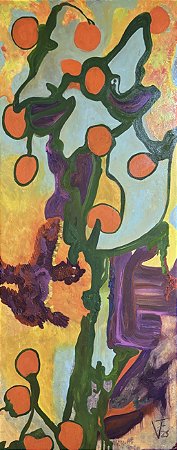
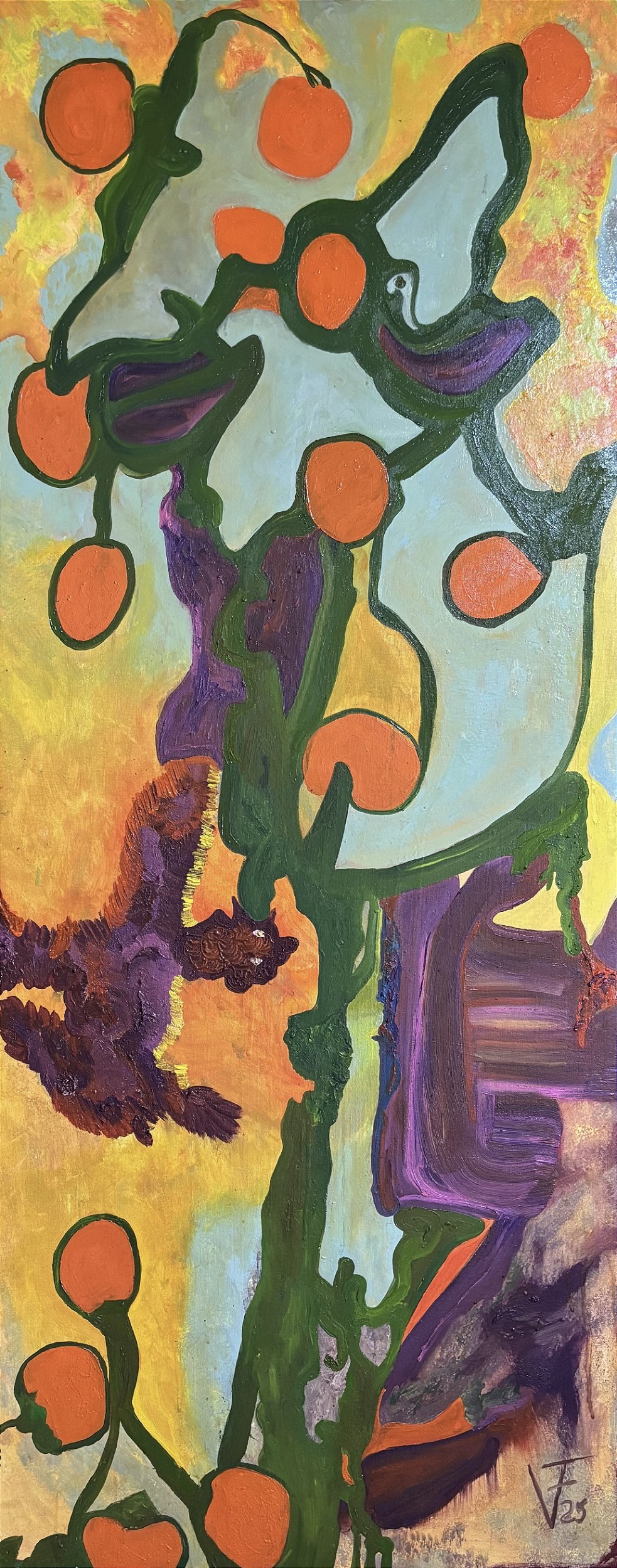
Análise Técnica A obra "ORANGE TREE" é uma composição predominantemente vertical de 151x61 cm, executada com tinta a óleo sobre um robusto canvas de 400g. A composição se estrutura em torno da figura abstrata de uma árvore de laranja, com uma paleta de cores vibrante que evoca um dia ensolarado. Predominam os tons de laranja, que compõem as frutas de forma destacada, e diversas tonalidades de verde, que formam a folhagem e os galhos da árvore. O fundo da tela é preenchido por um jogo de cores quentes como amarelo e laranja, que transicionam para azuis claros, sugerindo um céu luminoso.
A aplicação da tinta a óleo é rica e variada. Há áreas onde a tinta é densamente empastada, conferindo uma textura tátil e tridimensionalidade, especialmente nas laranjas e em partes da folhagem. Em outros pontos, a tinta é aplicada de forma mais fluida, permitindo transições suaves entre as cores, especialmente no céu. A presença de um canvas de 400g oferece uma base sólida e durável, que suporta a densidade da tinta a óleo e contribui para a longevidade da obra. No lado esquerdo da tela, uma figura estilizada de ave se destaca pela sua coloração roxa. A pincelada é expressiva e orgânica, evitando contornos rígidos e buscando a fluidez das formas naturais. O contraste entre os laranjas e verdes da árvore e o roxo da ave, realçado pelo fundo luminoso, cria um ponto focal dinâmico e expressivo.
Análise Conceitual O título "ORANGE TREE" e o contexto fornecido revelam uma investigação conceitual que transcende a mera representação, focando na evocação de um ambiente específico e na liberdade poética. A obra celebra a figura abstrata de uma árvore de laranja, situando-a poeticamente em um "dia ensolarado no interior do estado de São Paulo". Este cenário é crucial para a atmosfera da pintura, que busca capturar a essência da luz e do calor característicos dessa região.
A inclusão da ave estilizada em tons de roxo, voando baixo em direção à laranjeira, é uma "licença poética" explícita do artista. Esta figura é a representação abstrata do sabiá laranjeira, uma ave comum no cenário do interior paulista, mas cuja coloração roxa deliberadamente se afasta do realismo. Essa escolha cromática não só adiciona um elemento de surpresa e mistério, mas também enfatiza que a obra busca a emoção e o simbolismo em vez da fidelidade mimética. A ave roxa pode simbolizar a magia, a liberdade ou um espírito da natureza que habita a laranjeira. A obra, portanto, é uma meditação sobre a natureza local, a vivacidade de um dia ensolarado e a interconexão entre a flora e a fauna, tudo isso filtrado através de uma visão artística que prioriza a expressão e a emoção sobre a realidade literal, celebrando a vitalidade e a beleza do interior de São Paulo.
Análise Estilística Estilisticamente, "ORANGE TREE" posiciona-se dentro da corrente do Abstracionismo Lírico, com fortes influências expressionistas na forma como a cor é utilizada para evocar emoção e atmosfera, e não apenas para descrever. A obra remete a uma "fantasia hiper-realista com elementos de arte digital" na sua execução, especialmente na luminosidade suave e etérea e no espectro de cores que se reflete no fundo. A ênfase na figura abstrata da laranjeira e na estilização da ave permite ao artista explorar a essência dos elementos naturais sem se prender aos detalhes fotográficos.
A pincelada expressiva e a rica textura do óleo sobre canvas de 400g dialogam com o Expressionismo, onde a subjetividade do artista é paramount. A composição vertical alongada da obra, com a figura da árvore e da ave, cria uma sensação de elevação e majestade, características que podem ser encontradas em abordagens que buscam o sublime na natureza. A liberdade no uso da cor, como a ave roxa, é um traço expressionista que permite a transmissão de uma verdade mais profunda e emocional do que a mera representação naturalista. A obra se alinha a uma arte que celebra a natureza com um toque onírico e pessoal, transformando paisagens familiares em experiências visuais que desafiam a percepção e convidam à contemplação
ENGLISH
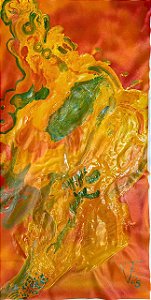
Technical Analysis The artwork "GOLDEN BREATH" is a large-scale abstract composition (158x251 cm), executed with a complex blend of enamel, oil paint, mixed mídia, spray paints on a canvas previously prepared with latex paint and enamel. This combination of materials gives the artwork a multifaceted texture and tactile richness, where enamel and latex can create smoother, shinier surfaces, while oil paint and sprays add layers, opacity, and granularity. This blend of industrial and traditional artistic materials reinforces the theme of the clash between the natural and the artificial, the organic and the exploited, resulting in a surface that appears alive, yet also marked and altered.
The palette is dominated by a rich tapestry of greens and browns, symbolizing the dense jungle, fertile earth, and winding rivers of the Amazon. Varieties of green – from deep emerald to translucent aqua – evoke the luxuriant vegetation and riverbeds. Earthy browns, in various saturations, represent the forest floor and the mud stirred by human activity. However, the most striking element is the golden areas that spread and cut across the canvas like veins, a result of mixed paint pigments. These golden eruptions are a focal point and a break in organic nature, inserting a layer of brilliance and, metaphorically, of greed. Subtle touches of pink or lavender in some areas add an ethereal, almost ghostly layer, contrasting with the rawness of natural elements. The composition is profoundly abstract and gestural, without a single focal point or defined perspective. The paints drip, splatter, and layer, creating a sense of constant motion, almost like an aerial map of a region undergoing transformation. The golden lines function as rivers of gold, or as the trails and clearings that open up in the forest. The action painting or drip painting technique lends the work a raw, visceral energy, mimicking the force of nature and abrupt intrusion.
Conceptual Analysis The title "GOLDEN BREATH" is a powerful metaphor and the conceptual core of the artwork, directly alluding to artisanal gold mining, which primarily occurs in Brazil's Legal Amazon. "Golden Breath" evokes the idea of gold as the very breath, the vital system of the region – whether for its intrinsic and natural value or for the frenzy of its pursuit. The work delves into the dichotomy between the natural wealth of the Amazon – its "green lung" – and the incessant and often devastating race for the precious metal.
This canvas not only illustrates but poetically expresses the intrinsic tension between the exuberance of the forest and the deep scars left by gold extraction. The shades of green and brown poetically blend and intertwine, representing the dense jungle, fertile earth, and winding rivers that are the pulsating soul of the region. Within this landscape, the various golden areas visible throughout the canvas, amidst the forests, rivers, and earth, are not mere pictorial details; they are veins that cut and spread, symbolizing the gold that permeates the soil and waters. This gold manifests sometimes as a shimmering promise of fortune, sometimes as a merciless agent of destruction. It is the silent cry of the forest that breathes gold dust and, at times, suffocates with human ambition, transforming its vitality into a system of exploitation where beauty and devastation dance in a tragic and inevitable ballet. The work symbolizes the intricate and often devastating relationship between humanity and nature in the Amazonian context, a visual lament and a warning, but also a celebration of the indomitable natural beauty that persists despite aggressions.
Stylistic Analysis Stylistically, "GOLDEN BREATH" intensely dialogues with the traditions of gestural abstraction, Abstract Expressionism, and Action Painting, movements that value the energy of the creative process and visceral expression. The artwork echoes the approach of artists who seek to transcend literal representation to achieve a deeper, more sensory truth about a phenomenon or place. The emphasis on gesturality, the spontaneity of paint application, and the creation of an "all-over" surface (where visual energy is distributed throughout the canvas without a single focal point) are defining characteristics. The drip painting technique lends the work a raw, visceral energy, mimicking the force of nature and abrupt intrusion.
The use of enamel, oil paint, and spray paint on a canvas prepared with latex and enamel shows an experimental and contemporary approach to material manipulation. This fusion of architectural elements with the abstract and the symbolic representation of the relationship between gold and the Amazon aligns with contemporary art that addresses themes of environmental impact and the complexity of human interactions with vital ecosystems. The way gold is inserted and the manner in which colors expand, blend, and collide create a dynamic composition that is both poetic and impactful, transforming socio-environmental reality into a powerful artistic statement.
Produtos relacionados

A Galeria Margot nasceu do olhar sensível e da jornada pessoal do médico e artista plástico Fábio Teixeira. Fundada como um espaço de expressão e resiliência, a galeria celebra a arte contemporânea em suas diversas formas, refletindo a paixão de seu idealizador por cores, texturas e a capacidade transformadora da criação artística. Mais que uma galeria, é um lugar onde a arte floresce como um legado de amor e superação.


Galeria Margot - CPF: 543.143.139-00 © Todos os direitos reservados. 2026
