HOSPOT
O Caos Visceral e a Sinfonia da Resiliência Humana
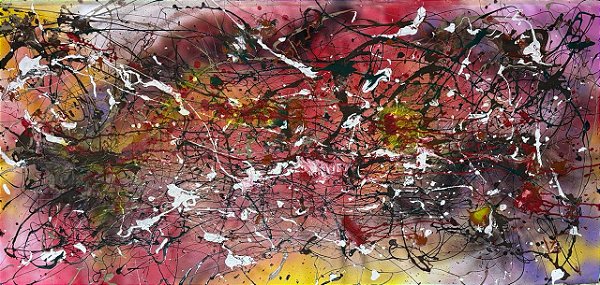
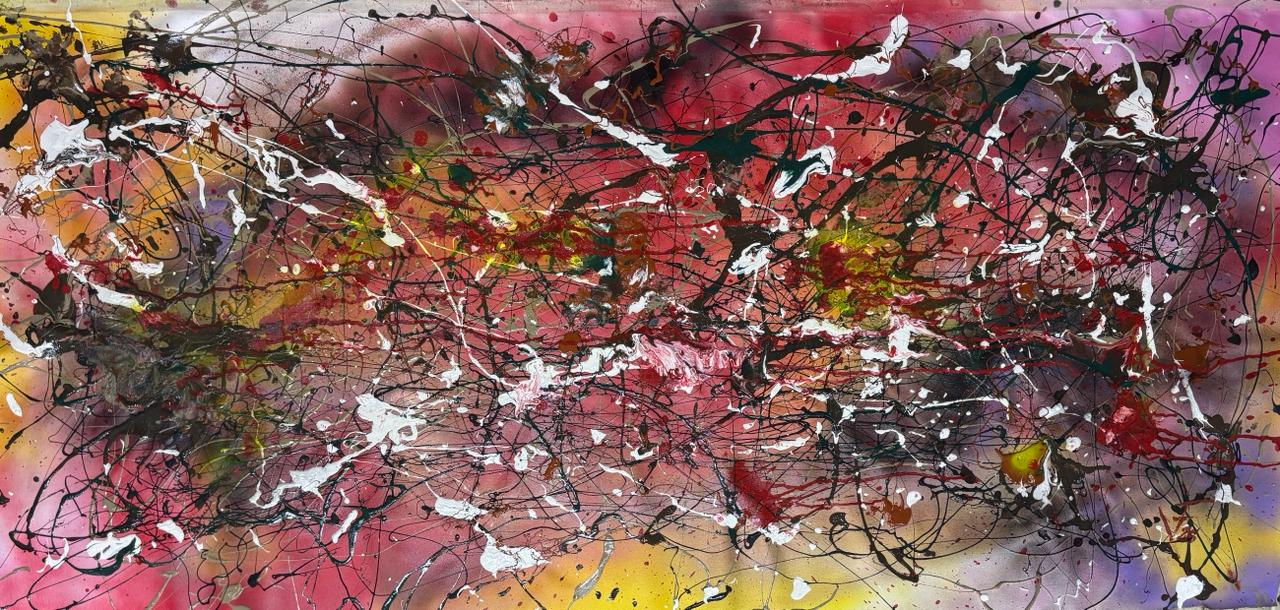
Ao contemplar "HOSPOT", somos imediatamente lançados em uma cacofonia visual que, paradoxalmente, encontra sua própria e pulsante ordem. Com suas dimensões imponentes de 70 cm por 160 cm, a obra exige uma imersão total, abraçando o observador com sua energia vibrante.
Estilo de Pintura: A Dança da Expressão Abstrata
O estilo de "HOSPOT" é a quintessência do Abstracionismo Lírico e, mais especificamente, da Action Painting. Não se trata de uma representação figurativa, mas de uma exploração profunda da emoção e do movimento através da cor e da linha. A composição é deliberadamente "all-over", significando que não há um ponto focal único; cada centímetro da tela contribui para a experiência total, mantendo o olhar em um constante movimento de descoberta.
A paleta é um turbilhão de tons quentes – vermelhos incandescentes, amarelos vibrantes e laranjas ardentes – que servem de leito para uma profusão de grafismos em preto, branco e toques de verde escuro. Essa base cromática evoca, de forma pungente, a natureza inflamatória e a complexidade interna a que o título alude. É como se estivéssemos olhando para dentro de um organismo, para a beleza terrível de um processo biológico em ebulição.
Semelhanças a Outros Artistas: Um Diálogo com os Mestres
É impossível não evocar a sombra grandiosa de Jackson Pollock ao se deparar com a técnica de "HOSPOT". A metodologia de gotejamento, derramamento e arremesso da tinta, que se solidifica em um intrincado emaranhado de linhas e salpicos, é um claro aceno ao mestre do Action Painting.
No entanto, a obra transcende a mera emulação. A presença de camadas mais densas e a interação entre as cores de fundo e as linhas superpostas conferem-lhe uma profundidade distinta. Há também um eco da intensidade visceral e da riqueza textural encontradas nas obras de Willem de Kooning, embora com um vocabulário puramente abstrato. A forma como os jatos de tinta criam "poças" e "ilhas" de cor lembram a densidade material de Joan Mitchell ou a energia caligráfica de Cy Twombly, mas com uma urgência controlada que lhe é própria.
Técnica Empregada: A Sinfonia de Mídias Mistas
A ficha técnica revela uma mestria na combinação de materiais. A utilização de tinta a óleo confere à obra uma profundidade e riqueza clássicas. O esmalte, por outro lado, introduz um elemento de brilho e fluidez, criando um contraste fascinante entre áreas de reflexão e opacidade.
A denominação mídia mista sobre canvas indica que o artista provavelmente empregou métodos de derramamento, gotejamento e esguicho, construindo a obra através de um processo de adição, de controle e de acaso. O resultado é uma superfície rica em detalhes, onde o olhar pode se perder nas intersecções e nas camadas que se revelam a cada nova perspectiva.
ENGLISH
Visceral Chaos and the Symphony of Human Resilience
Upon contemplating "HOSPOT," we are immediately thrust into a visual cacophony that, paradoxically, finds its own pulsating order. With its imposing dimensions of 70 cm by 160 cm, the work demands total immersion, embracing the observer with its vibrant energy. It's a piece that doesn't just hang on a wall; it interacts, envelops, and challenges the viewer to engage with its complex visual narrative. The scale itself is a statement, allowing the intricate details and broad gestural movements to unfold across a significant visual field, preventing a quick glance and instead inviting a prolonged, meditative exploration. The sheer presence of the artwork commands attention, creating an almost physical sensation of being drawn into its vibrant core.
Painting Style: The Dance of Abstract Expression
The style of "HOSPOT" is the quintessence of Lyrical Abstraction and, more specifically, Action Painting. It is not about figurative representation, but a profound exploration of emotion and movement through color and line. The composition is deliberately "all-over," meaning there is no single focal point; every inch of the canvas contributes to the total experience, keeping the gaze in a constant motion of discovery. This "all-over" approach means that the viewer's eye is never allowed to rest on one dominant element but is instead encouraged to wander across the entire surface, finding new connections and details with each sweep. It's a democratic surface where every mark, every splash, every drip holds equal significance in the overall visual symphony. This technique forces a different kind of engagement, one that is less about identifying objects and more about feeling the raw energy and spontaneity embedded in the paint.
The palette is a whirlwind of warm tones – incandescent reds, vibrant yellows, and ardent oranges – serving as a bed for a profusion of black and white graphic marks, with touches of dark green. This chromatic base powerfully evokes the inflammatory nature and internal complexity to which the title alludes. It is as if we are looking inside an organism, into the terrible beauty of a biological process in effervescence. The choice of warm, intense colors immediately communicates a sense of heat, passion, and perhaps even pain or raw life force, echoing the very essence of a "hot spot" or an area of intense activity. The interplay of these fiery hues with the stark contrasts of black and white, punctuated by the cooler, grounding dark green, creates a dynamic tension that is both visually stimulating and emotionally resonant. One can almost feel the pulse and thrum of the hidden processes suggested by this vibrant interplay of color.
Similarities to Other Artists: A Dialogue with the Masters
It is impossible not to evoke the grand shadow of Jackson Pollock when encountering the technique of "HOSPOT." The methodology of dripping, pouring, and flinging paint, which solidifies into an intricate tangle of lines and splatters, is a clear nod to the master of Action Painting. The sheer dynamism and uncontrolled yet deliberate application of paint are reminiscent of Pollock's groundbreaking approach, where the act of creation itself becomes a performance, leaving behind a tangible record of the artist's physical engagement with the canvas. The chaotic yet harmonious layering of paint points directly to his influence.
However, the work transcends mere emulation. The presence of denser layers and the interaction between the background colors and superimposed lines give it a distinct depth. There is also an echo of the visceral intensity and textural richness found in the works of Willem de Kooning, albeit with a purely abstract vocabulary. While de Kooning often retained hints of figuration within his expressive abstractions, "HOSPOT" commits entirely to the non-representational, channeling a similar raw emotional power through purely abstract forms. The way the jets of paint create "pools" and "islands" of color recalls the material density of Joan Mitchell or the calligraphic energy of Cy Twombly, but with a controlled urgency that is uniquely its own. It's as if the artist has harnessed the wild spontaneity of action painting and imbued it with a deliberate sense of rhythm and structure, creating a dialogue between chaos and order that is utterly captivating. The work manages to borrow from these masters while forging its own unique visual language, a testament to the artist's inventive spirit and mastery of the medium.
Technique Employed: The Symphony of Mixed Media
The technical data reveals a mastery in combining materials. The use of oil paint confers a classic depth and richness to the work. Enamel, on the other hand, introduces an element of shine and fluidity, creating a fascinating contrast between areas of reflection and opacity. This juxtaposition of traditional and contemporary mediums adds layers of visual interest and tactile variation to the surface. The oil paint offers a foundational depth, absorbing and reflecting light in a subtle, classic manner, while the enamel provides a sharper, more modern gleam, catching the light in a way that emphasizes the dynamic movements within the piece.
The designation "mixed media on canvas" indicates that the artist likely employed methods of pouring, dripping, and splashing, building the work through a process of addition, control, and chance. The result is a surface rich in details, where the eye can get lost in the intersections and layers that reveal themselves with each new perspective. This methodology suggests a dance between intent and accident, where the artist guides the materials but also allows for the unpredictable beauty that arises from their spontaneous interaction. The viewer is invited to explore these intricate details, finding new forms and textures with every closer look, making each viewing a unique and immersive experience. The combination of control and serendipity is what gives "HOSPOT" its captivating vibrancy and enduring appeal.