


PORTUGUÊS
Análise Crítica da Obra
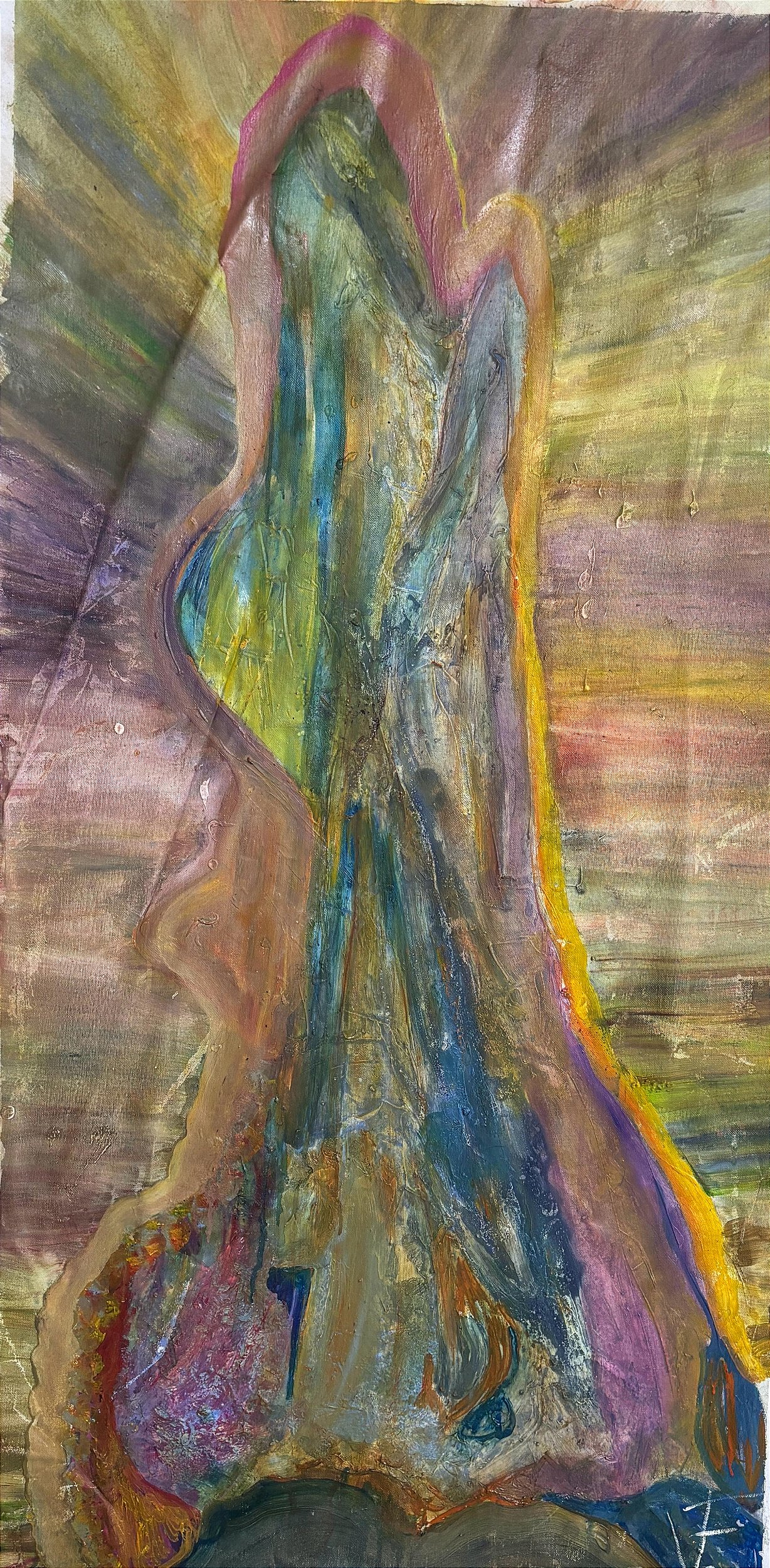
"GUADALUPE" apresenta-se como uma obra monumental que transcende categorias convencionais, fundindo o expressionismo abstrato contemporâneo com elementos do simbolismo espiritual. Esta imponente pintura em óleo e mídia mista sobre canvas (117 x 58 cm) estabelece um diálogo fascinante entre a tradição iconográfica católica e a linguagem visual contemporânea. O formato vertical alongado evoca deliberadamente os retábulos religiosos, criando uma presença quase arquitetônica que convida à contemplação reverencial, enquanto a técnica mista introduz texturas e dimensões que ultrapassam os limites da pintura tradicional.
A composição é dominada por uma figura central etérea que emerge de um fundo radiante, reminiscente da aparição milagrosa de Nossa Senhora de Guadalupe a Juan Diego em 1531. O artista emprega uma paleta cromática de extraordinária luminosidade, onde predominam azuis celestiais, dourados transcendentes e verdes terrenos, estabelecendo um espectro visual que conecta o divino ao mundano. Particularmente notável é o tratamento da luz, que parece emanar do interior da própria pintura, criando um efeito de luminescência interna que ecoa o milagre das rosas e da imagem impressa no tilma de Juan Diego.
As camadas de tinta e materiais diversos criam uma topografia visual complexa, onde elementos abstratos e sugestões figurativas coexistem em tensão harmônica. Formas orgânicas fluidas evocam as rosas milagrosas da narrativa guadalupana, enquanto padrões geométricos sutis sugerem a estrutura cósmica que frequentemente envolve a Virgem nas representações tradicionais. O artista manipula magistralmente a textura para criar zonas de densidade variável, alternando entre áreas de transparência etérea e passagens de materialidade pronunciada, espelhando assim a natureza dual do milagre – simultaneamente tangível e transcendente.
A reinterpretação contemporânea deste ícone religioso fundamental para a identidade latino-americana transcende a mera representação para se tornar uma meditação visual sobre fé, identidade cultural e sincretismo. O artista evita deliberadamente a literalidade iconográfica tradicional, preferindo capturar a essência energética e emocional do milagre através de sugestões abstratas e ressonâncias cromáticas. Esta abordagem permite que a obra ressoe tanto com espectadores devotos quanto com aqueles que a abordam de uma perspectiva puramente estética ou cultural.
Em sua essência, "GUADALUPE" não é apenas uma homenagem a um evento religioso histórico, mas uma exploração profunda da persistência do sagrado na consciência contemporânea. A obra convida o espectador a uma experiência que é simultaneamente sensorial e contemplativa, onde o milagre guadalupano é recontextualizado como um fenômeno vivo e vibrante, não confinado ao passado histórico ou à doutrina religiosa. Através de sua linguagem visual sofisticada e emocionalmente ressonante, o artista consegue criar um espaço liminar onde o antigo e o contemporâneo, o divino e o humano, o abstrato e o concreto coexistem em um diálogo perpetuamente renovado.
ENGLISH
"GUADALUPE" presents itself as a monumental work that transcends conventional categories, merging contemporary abstract expressionism with elements of spiritual symbolism. This imposing painting in oil and mixed media on canvas (117 x 58 cm) establishes a fascinating dialogue between Catholic iconographic tradition and contemporary visual language. The elongated vertical format deliberately evokes religious altarpieces, creating an almost architectural presence that invites reverential contemplation, while the mixed technique introduces textures and dimensions that exceed the limits of traditional painting.
The composition is dominated by an ethereal central figure that emerges from a radiant background, reminiscent of the miraculous apparition of Our Lady of Guadalupe to Juan Diego in 1531. The artist employs a chromatic palette of extraordinary luminosity, where celestial blues, transcendent golds, and earthly greens predominate, establishing a visual spectrum that connects the divine to the mundane. Particularly notable is the treatment of light, which seems to emanate from within the painting itself, creating an effect of internal luminescence that echoes the miracle of the roses and the image impressed on Juan Diego's tilma.
The layers of paint and diverse materials create a complex visual topography, where abstract elements and figurative suggestions coexist in harmonic tension. Fluid organic forms evoke the miraculous roses of the Guadalupan narrative, while subtle geometric patterns suggest the cosmic structure that frequently surrounds the Virgin in traditional representations. The artist masterfully manipulates texture to create zones of variable density, alternating between areas of ethereal transparency and passages of pronounced materiality, thus mirroring the dual nature of the miracle – simultaneously tangible and transcendent.
The contemporary reinterpretation of this religious icon fundamental to Latin American identity transcends mere representation to become a visual meditation on faith, cultural identity, and syncretism. The artist deliberately avoids traditional iconographic literality, preferring to capture the energetic and emotional essence of the miracle through abstract suggestions and chromatic resonances. This approach allows the work to resonate both with devout viewers and with those who approach it from a purely aesthetic or cultural perspective.
At its core, "GUADALUPE" is not just a homage to a historical religious event, but a profound exploration of the persistence of the sacred in contemporary consciousness. The work invites the viewer to an experience that is simultaneously sensory and contemplative, where the Guadalupan miracle is recontextualized as a living and vibrant phenomenon, not confined to historical past or religious doctrine. Through its sophisticated and emotionally resonant visual language, the artist manages to create a liminal space where the ancient and the contemporary, the divine and the human, the abstract and the concrete coexist in a perpetually renewed dialogue.

A Galeria Margot nasceu do olhar sensível e da jornada pessoal do médico e artista plástico Fábio Teixeira. Fundada como um espaço de expressão e resiliência, a galeria celebra a arte contemporânea em suas diversas formas, refletindo a paixão de seu idealizador por cores, texturas e a capacidade transformadora da criação artística. Mais que uma galeria, é um lugar onde a arte floresce como um legado de amor e superação.



Galeria Margot - CPF: 543.143.139-00 © Todos os direitos reservados. 2026
