

PORTUGUÊS
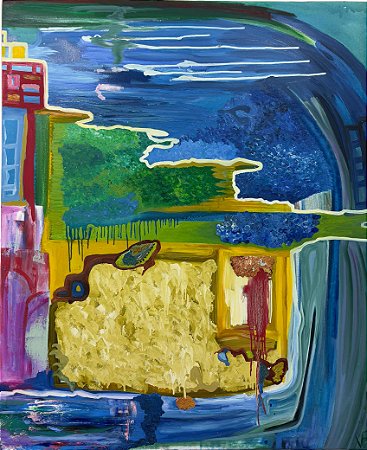
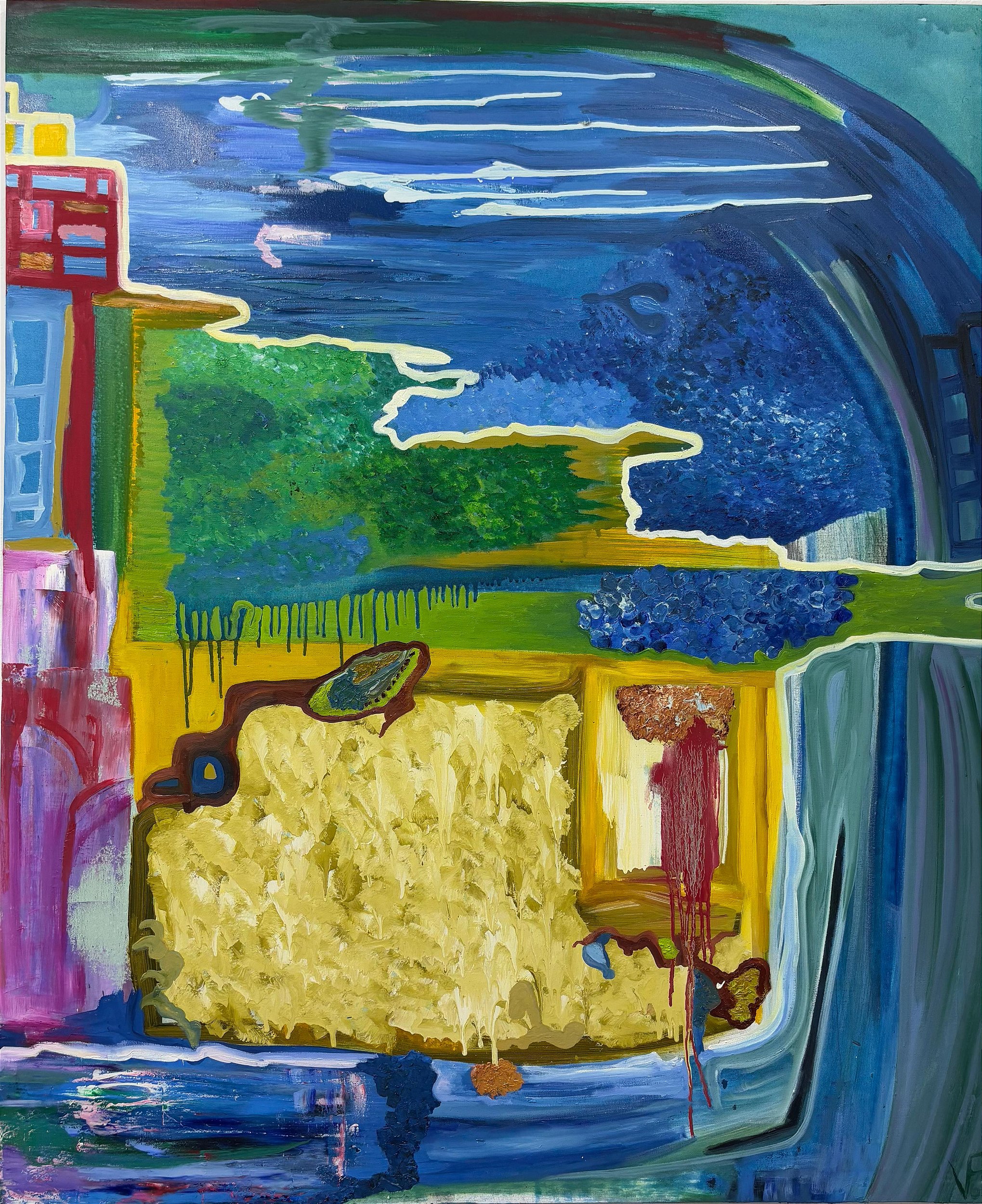
"BETWEEN RIVER AND SEA" apresenta-se como uma obra magistral que se insere na tradição do expressionismo abstrato lírico, com influências claras da pintura de paisagem contemporânea. Esta imponente tela a óleo (120 x 100 cm) estabelece um campo visual expansivo onde o artista explora a zona liminar entre águas doces e salgadas, não como uma representação literal, mas como uma meditação cromática sobre estados de transição e fronteiras fluidas. O formato monumental convida o espectador a uma imersão contemplativa, criando uma experiência quase física do espaço aquático representado.
A composição é dominada por uma extraordinária sinfonia de azuis que transitam do turquesa luminoso ao índigo profundo, entrelaçados com verdes aquáticos e ocasionais acentos terrosos que evocam sedimentos ou margens distantes. Particularmente notável é a estruturação horizontal da tela, onde camadas cromáticas se sobrepõem e interpenetram, criando zonas de densidade variável que sugerem as diferentes propriedades físicas das águas fluviais e marinhas. O artista emprega uma técnica sofisticada de veladura que permite vislumbrar camadas subjacentes, evocando a transparência variável da água e sua capacidade de revelar e ocultar simultaneamente.
A tensão entre movimento e quietude constitui um dos aspectos mais fascinantes da obra. Pinceladas fluidas e gestuais na seção superior sugerem a agitação superficial das águas expostas ao vento, enquanto áreas de maior estabilidade cromática na porção inferior evocam as profundezas mais calmas e misteriosas. Esta dualidade cinética reflete a natureza dos estuários e deltas, onde correntes contrárias se encontram e negociam um equilíbrio dinâmico. A luz na pintura não parece provir de uma fonte externa, mas emanar das próprias águas, criando um efeito de luminescência interna que transforma o espaço pictórico em um campo energético pulsante.
O título "BETWEEN RIVER AND SEA" opera em múltiplos níveis de significado, referindo-se não apenas ao fenômeno geográfico, mas também a estados existenciais de transição e ambiguidade. Nesta leitura metafórica, a obra torna-se uma reflexão visual sobre liminares – aqueles espaços intermediários onde identidades distintas se encontram e se transformam mutuamente. A assinatura discreta no canto inferior direito, quase absorvida pela turbulência cromática, reforça a sensação de que o artista subordinou sua presença individual à contemplação de forças naturais que transcendem a escala humana.
Em sua essência, "BETWEEN RIVER AND SEA" transcende a mera representação paisagística para se tornar uma exploração profunda da natureza dialética da existência – entre permanência e fluxo, entre o familiar e o desconhecido, entre contenção e liberdade. A obra recusa qualquer interpretação estática ou unidimensional, insistindo em sua natureza mutável que, como as águas que evoca, nunca pode ser apreendida em sua totalidade em um único momento. Como uma ponte entre o tangível e o inefável, esta pintura convida o espectador a habitar temporariamente aquele espaço mágico onde os opostos não se anulam, mas dançam em perpétuo diálogo, gerando novas possibilidades de percepção e significado.
ENGLISH
"BETWEEN RIVER AND SEA" presents itself as a masterful work in the tradition of lyrical abstract expressionism, with clear influences from contemporary landscape painting. This imposing oil canvas (120 x 100 cm) establishes an expansive visual field where the artist explores the liminal zone between fresh and saltwater, not as a literal representation but as a chromatic meditation on states of transition and fluid boundaries. The monumental format invites the viewer to a contemplative immersion, creating an almost physical experience of the aquatic space depicted.
The composition is dominated by an extraordinary symphony of blues transitioning from luminous turquoise to deep indigo, interwoven with aquatic greens and occasional earthy accents evoking sediments or distant shores. Particularly notable is the horizontal structuring of the canvas, where chromatic layers overlap and interpenetrate, creating zones of varying density that suggest the different physical properties of riverine and marine waters. The artist employs a sophisticated glazing technique that allows glimpses of underlying layers, evoking the variable transparency of water and its ability to simultaneously reveal and conceal.
The tension between movement and stillness is one of the most fascinating aspects of the work. Fluid, gestural brushstrokes in the upper section suggest the surface agitation of waters exposed to wind, while areas of greater chromatic stability in the lower portion evoke calmer, more mysterious depths. This kinetic duality reflects the nature of estuaries and deltas, where opposing currents meet and negotiate a dynamic equilibrium. The light in the painting does not seem to come from an external source but to emanate from the waters themselves, creating an effect of internal luminescence that transforms the pictorial space into a pulsating energy field.
The title "BETWEEN RIVER AND SEA" operates on multiple levels of meaning, referring not only to the geographical phenomenon but also to existential states of transition and ambiguity. In this metaphorical reading, the work becomes a visual reflection on liminality—those intermediate spaces where distinct identities meet and transform each other. The discreet signature in the lower right corner, almost absorbed by the chromatic turbulence, reinforces the sense that the artist has subordinated their individual presence to the contemplation of natural forces that transcend the human scale.
In essence, "BETWEEN RIVER AND SEA" transcends mere landscape representation to become a profound exploration of the dialectical nature of existence—between permanence and flow, the familiar and the unknown, containment and freedom. The work refuses any static or one-dimensional interpretation, insisting on its mutable nature which, like the waters it evokes, can never be fully comprehended in a single moment. As a bridge between the tangible and the ineffable, this painting invites the viewer to temporarily inhabit that magical space where opposites do not cancel each other out but dance in perpetual dialogue, generating new possibilities for perception and meaning.
Produtos relacionados

A Galeria Margot nasceu do olhar sensível e da jornada pessoal do médico e artista plástico Fábio Teixeira. Fundada como um espaço de expressão e resiliência, a galeria celebra a arte contemporânea em suas diversas formas, refletindo a paixão de seu idealizador por cores, texturas e a capacidade transformadora da criação artística. Mais que uma galeria, é um lugar onde a arte floresce como um legado de amor e superação.



Galeria Margot - CPF: 543.143.139-00 © Todos os direitos reservados. 2026
