

-
- 1x de R$ 2.100,00 sem juros
- 2x de R$ 1.050,00 sem juros
- 3x de R$ 700,00 sem juros
- 4x de R$ 525,00 sem juros
- 5x de R$ 420,00 sem juros
- 6x de R$ 350,00 sem juros
- 7x de R$ 300,00 sem juros
- 8x de R$ 262,50 sem juros
- 9x de R$ 233,33 sem juros
- 10x de R$ 210,00 sem juros
- 11x de R$ 190,90 sem juros
- 12x de R$ 175,00 sem juros
-
R$ 2.100,00

-
R$ 2.100,00


PORTUGUÊS
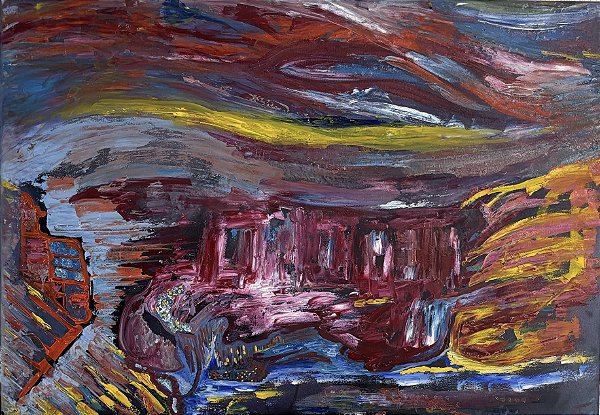
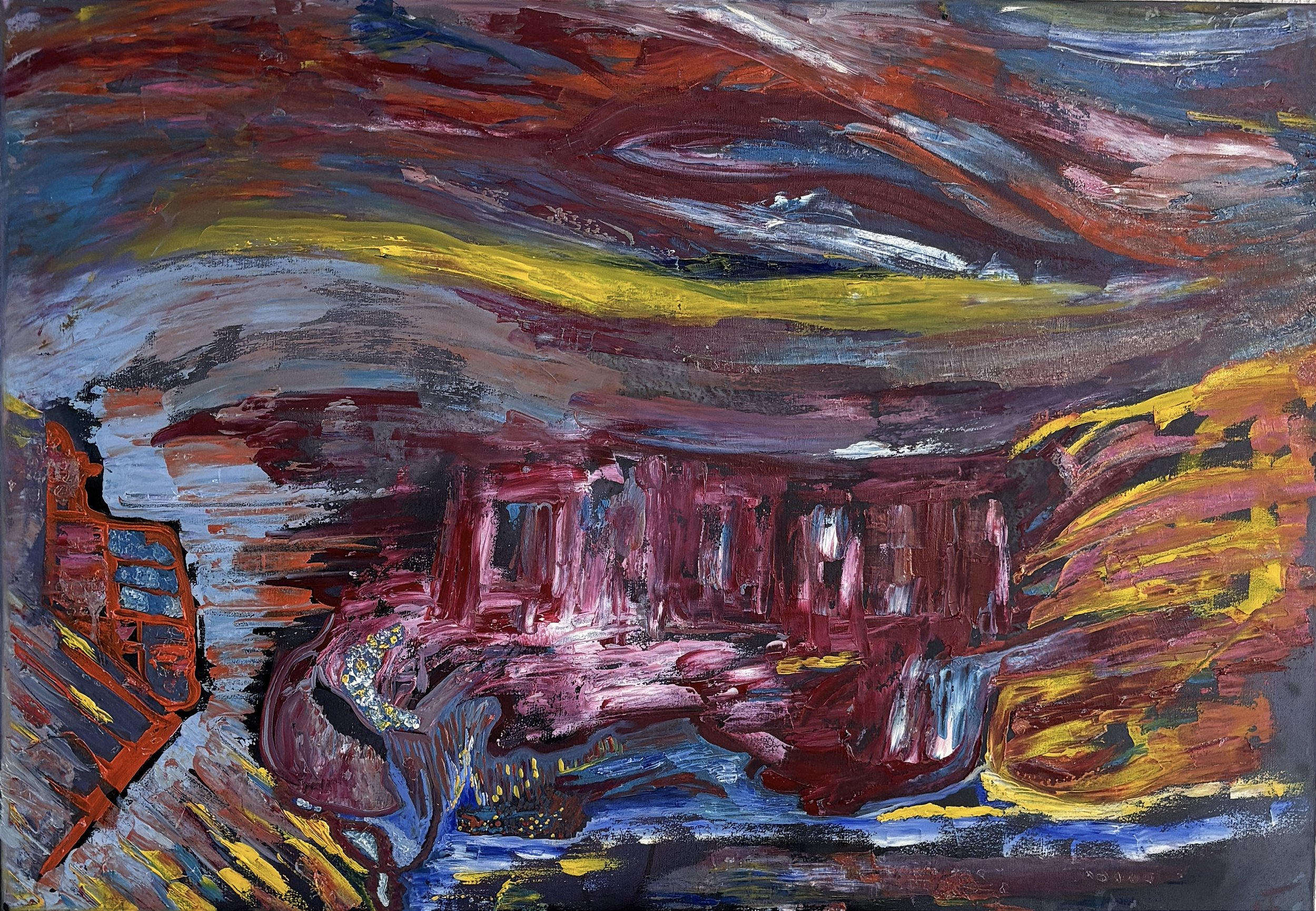
ARMAGGEDON" apresenta-se como uma obra de extraordinária potência visual que se insere na tradição do expressionismo apocalíptico contemporâneo. Esta imponente pintura a óleo sobre canvas (70 x 100 cm) estabelece um campo cromático de intensidade quase física, onde o artista explora a iconografia do cataclismo final não como narrativa literal, mas como experiência sensorial avassaladora. O formato horizontal expansivo amplifica o impacto dramático da composição, criando um panorama de destruição e transformação que envolve completamente o campo visual do espectador.
A paleta cromática é dominada por vermelhos incandescentes e laranjas sulfúricos que evocam imediatamente fogo e devastação, contrastados estrategicamente com negros abissais e ocasionais acentos de azul crepuscular que sugerem os últimos vestígios de céu visível. Particularmente notável é o tratamento da luz, que não parece emanar de uma fonte externa, mas da própria matéria em combustão, criando um efeito de luminosidade interna que transforma a superfície da tela em um campo energético pulsante. O artista emprega pinceladas turbulentas e gestuais que preservam a energia cinética do ato criativo, estabelecendo um paralelo conceitual entre a violência do gesto pictórico e a violência cósmica do tema representado.
A composição orquestra magistralmente o caos controlado, com estruturas que simultaneamente sugerem e negam formas reconhecíveis – silhuetas arquitetônicas em colapso, fragmentos de paisagem em dissolução, e possivelmente figuras humanas reduzidas a gestos esquemáticos. Esta ambiguidade deliberada entre abstração e figuração espelha a própria natureza do Armagedon como conceito liminar entre o material e o transcendente, o histórico e o mítico. Particularmente fascinante é a estruturação em planos sobrepostos que cria uma profundidade espacial vertiginosa, sugerindo múltiplas dimensões colapsando simultaneamente.
O título "ARMAGEDDON", opera como chave interpretativa que ancora a abstração expressiva da obra em uma tradição escatológica específica, evocando o campo de batalha final descrito no Apocalipse bíblico. No entanto, o artista transcende a literalidade religiosa para abordar o conceito de fim catastrófico como arquétipo universal presente em múltiplas culturas e como metáfora contemporânea para crises existenciais, ecológicas e civilizacionais. A assinatura discreta no canto inferior direito, quase absorvida pela turbulência cromática, reforça a sensação de que o artista subordinou sua presença individual à contemplação de forças que transcendem a escala humana.
Em sua essência, "ARMAGEDDON" não é apenas uma representação do fim, mas uma meditação visual sobre a beleza terrível da destruição e seu potencial regenerativo. A obra recusa qualquer moralização simplista do apocalipse, preferindo explorá-lo como momento de verdade reveladora – significado original da palavra grega "apocalypsis". Como um espelho para ansiedades coletivas contemporâneas e simultaneamente um espaço de catarse estética, esta pintura convida o espectador a confrontar o inominável e encontrar, paradoxalmente, uma experiência de sublime que transcende o horror imediato. Através de sua linguagem visual sofisticada e emocionalmente ressonante, o artista consegue transformar o tema potencialmente opressivo do fim último em uma experiência estética que é simultaneamente perturbadora e estranhamente libertadora.
ENGLISH
"ARMAGEDDON" presents itself as a work of extraordinary visual power that fits into the tradition of contemporary apocalyptic expressionism. This imposing oil painting on canvas (70 x 100 cm) establishes a chromatic field of almost physical intensity, where the artist explores the iconography of the final cataclysm not as a literal narrative, but as an overwhelming sensory experience. The expansive horizontal format amplifies the dramatic impact of the composition, creating a panorama of destruction and transformation that completely envelops the viewer's visual field.
The color palette is dominated by incandescent reds and sulfuric oranges that immediately evoke fire and devastation, strategically contrasted with abysmal blacks and occasional accents of twilight blue suggesting the last visible traces of the sky. Particularly notable is the treatment of light, which does not seem to emanate from an external source, but from the very matter in combustion, creating an effect of internal luminosity that transforms the surface of the canvas into a pulsating energy field. The artist employs turbulent, gestural brush strokes that preserve the kinetic energy of the creative act, establishing a conceptual parallel between the violence of the pictorial gesture and the cosmic violence of the represented theme.
The composition masterfully orchestrates controlled chaos, with structures that simultaneously suggest and deny recognizable forms—collapsing architectural silhouettes, dissolving landscape fragments, and possibly human figures reduced to schematic gestures. This deliberate ambiguity between abstraction and figuration mirrors the very nature of Armageddon as a liminal concept between the material and the transcendent, the historical and the mythical. Particularly fascinating is the structuring in overlapping planes that creates a vertiginous spatial depth, suggesting multiple dimensions collapsing simultaneously.
The title "ARMAGEDDON" serves as an interpretive key anchoring the expressive abstraction of the work in a specific eschatological tradition, evoking the final battlefield described in the biblical Apocalypse. However, the artist transcends religious literalness to approach the concept of catastrophic end as a universal archetype present in multiple cultures and as a contemporary metaphor for existential, ecological, and civilizational crises. The discreet signature in the lower right corner, almost absorbed by the chromatic turbulence, reinforces the sense that the artist has subordinated his individual presence to the contemplation of forces that transcend human scale.
In essence, "ARMAGEDDON" is not merely a representation of the end, but a visual meditation on the terrible beauty of destruction and its regenerative potential. The work refuses any simplistic moralization of the apocalypse, opting instead to explore it as a moment of revealing truth—the original meaning of the Greek word "apocalypsis." As a mirror for contemporary collective anxieties and simultaneously a space for aesthetic catharsis, this painting invites the viewer to confront the unnameable and find, paradoxically, a sublime experience that transcends immediate horror. Through its sophisticated and emotionally resonant visual language, the artist manages to transform the potentially oppressive theme of the ultimate end into an aesthetic experience that is both disturbing and strangely liberating.

A Galeria Margot nasceu do olhar sensível e da jornada pessoal do médico e artista plástico Fábio Teixeira. Fundada como um espaço de expressão e resiliência, a galeria celebra a arte contemporânea em suas diversas formas, refletindo a paixão de seu idealizador por cores, texturas e a capacidade transformadora da criação artística. Mais que uma galeria, é um lugar onde a arte floresce como um legado de amor e superação.


Galeria Margot - CPF: 543.143.139-00 © Todos os direitos reservados. 2026
